Students can’t learn if they can’t regularly make it to school
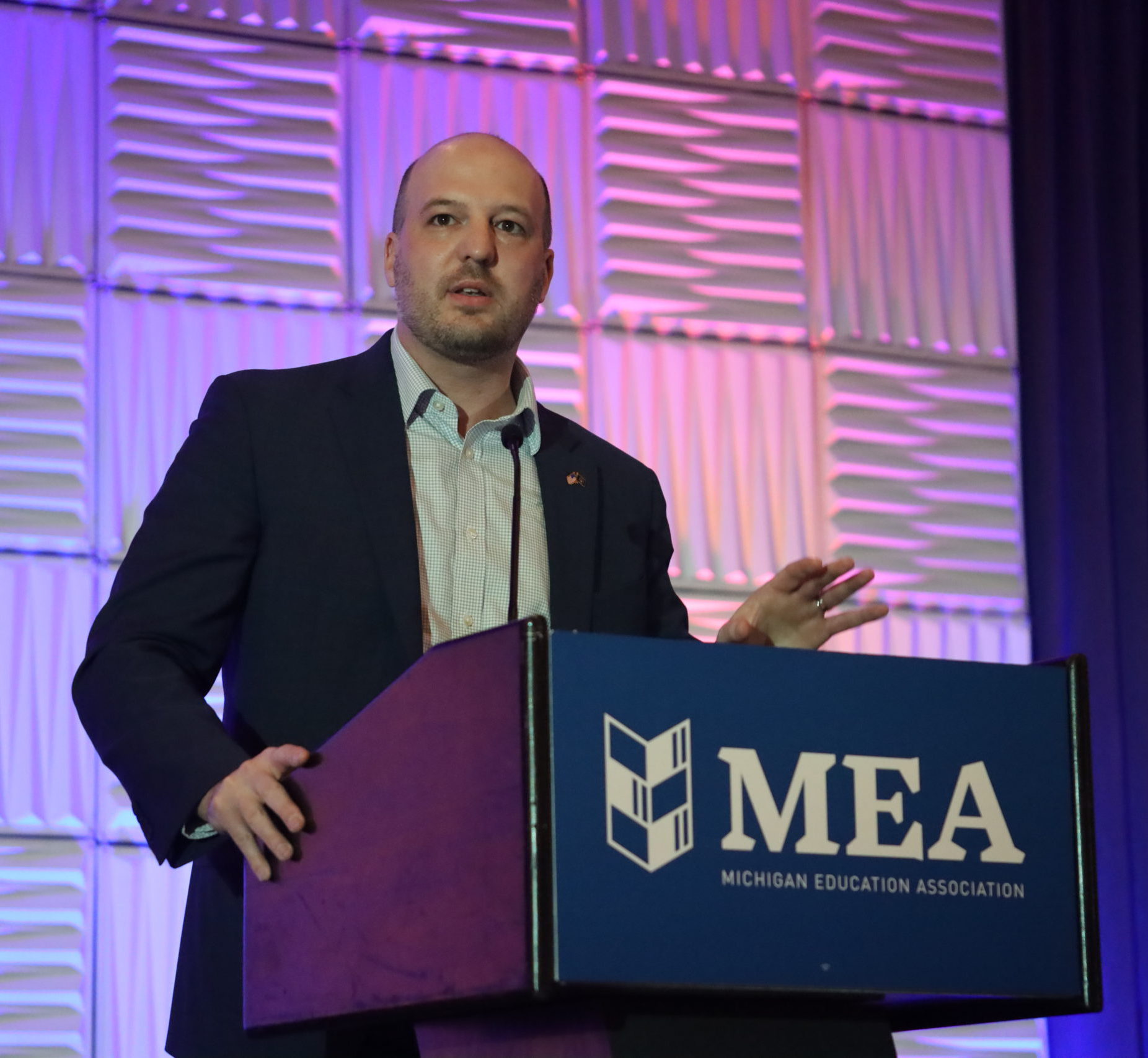
By Erik Edoff, Senior Executive Director, Michigan Education Association
Too many students across Michigan are missing too much time at school and falling further behind their peers. We must come together as a state to address this problem head-on so we can fulfill our promise to provide every student with the opportunity to succeed.
Chronic absenteeism is defined by a student missing 10% or more of instructional time, which can have a dramatic impact on a student’s ability to keep up with their schoolwork. The more a student misses, the further they fall behind, making it that much more difficult to catch up.
The percentage of students considered chronically absent increased dramatically during the pandemic, and our recovery to pre-pandemic numbers has been slow. In 2019, about 15% of students nationwide met the criteria for chronic absenteeism, according to a report compiled for the Education Recovery Scorecard. By 2023, 25.7% of students across the nation were chronically absent, the report found.
The problem is even more pronounced in Michigan. That report ranked Michigan ninth-highest in the nation in chronic absenteeism, with a rate of 30.8% in 2023. State Department of Education data shows the share of chronically absentee students dropping slightly to 27.9% by the 2024-25 school year, but that’s still well above Michigan’s pre-pandemic rate.
To turn around this trend, we must recognize the main reasons why students are missing so much school. Contrary to popular misconceptions, the problem isn’t a simple matter of truancy but rather a complex challenge that reflects broader societal issues.
The national advocacy organization Attendance Works identifies four root causes to chronic absenteeism: barriers, aversion, disengagement and misconceptions.
First, many chronically absent students face tangible barriers to attendance, including chronic illnesses, a lack of reliable transportation, housing and food insecurity, family responsibilities, unstable home schedules and a lack of access to community resources.
The second root cause, aversion, stems from students’ negative experiences and interactions at school. If a student is struggling academically, socially or emotionally, they will be less likely to show up.
Meanwhile, disengaged students often find themselves bored at school. They may lack meaningful relationships with school staff and peers, not receive adequate academic and behavioral support, and have fewer opportunities for extracurricular enrichment. In other words, they don’t see the point of going to school.
The fourth root cause of chronic absenteeism comes from misconceptions about the importance of regular school attendance. For these students and families, there is a lack of awareness about what’s at stake when you miss too much school — they might think that excused absences don’t “count,” missing school a few days every month isn’t a big deal, and they can just cram for exams to make up any missed instructional time.
It’s clear that chronic absenteeism is a complex challenge that requires multifaceted solutions. Educators in Michigan school districts are working to fix this problem by expanding partnerships with local social service agencies, adding more counseling and attendance specialist positions, and working more closely with students and families to address barriers to attendance.
However, our schools continue to struggle with a shortage of teachers, support staff, mental health professionals and other key positions. Educators are already stretched to the limit. They need help.
We as a state have an opportunity to come together to address chronic absenteeism — not through blame or posturing, but through greater investment in our schools and deeper cooperation between school districts, community organizations, families and state leaders.
This challenge knows no political party or geographic boundary. It’s going to take all of us working together to address root causes and create conditions where every student can attend school every day and have every opportunity to succeed.
Labor Voices
Labor Voices columns are written on a rotating basis by United Auto Workers President Shawn Fain, Michigan Education Association President Chandra Madafferi, Michigan Regional Council of Carpenters and Millwrights Executive Secretary-Treasurer Tom Lutz and selected Service Employees International Union members.