MEA Higher Ed leaders share ideas at summit
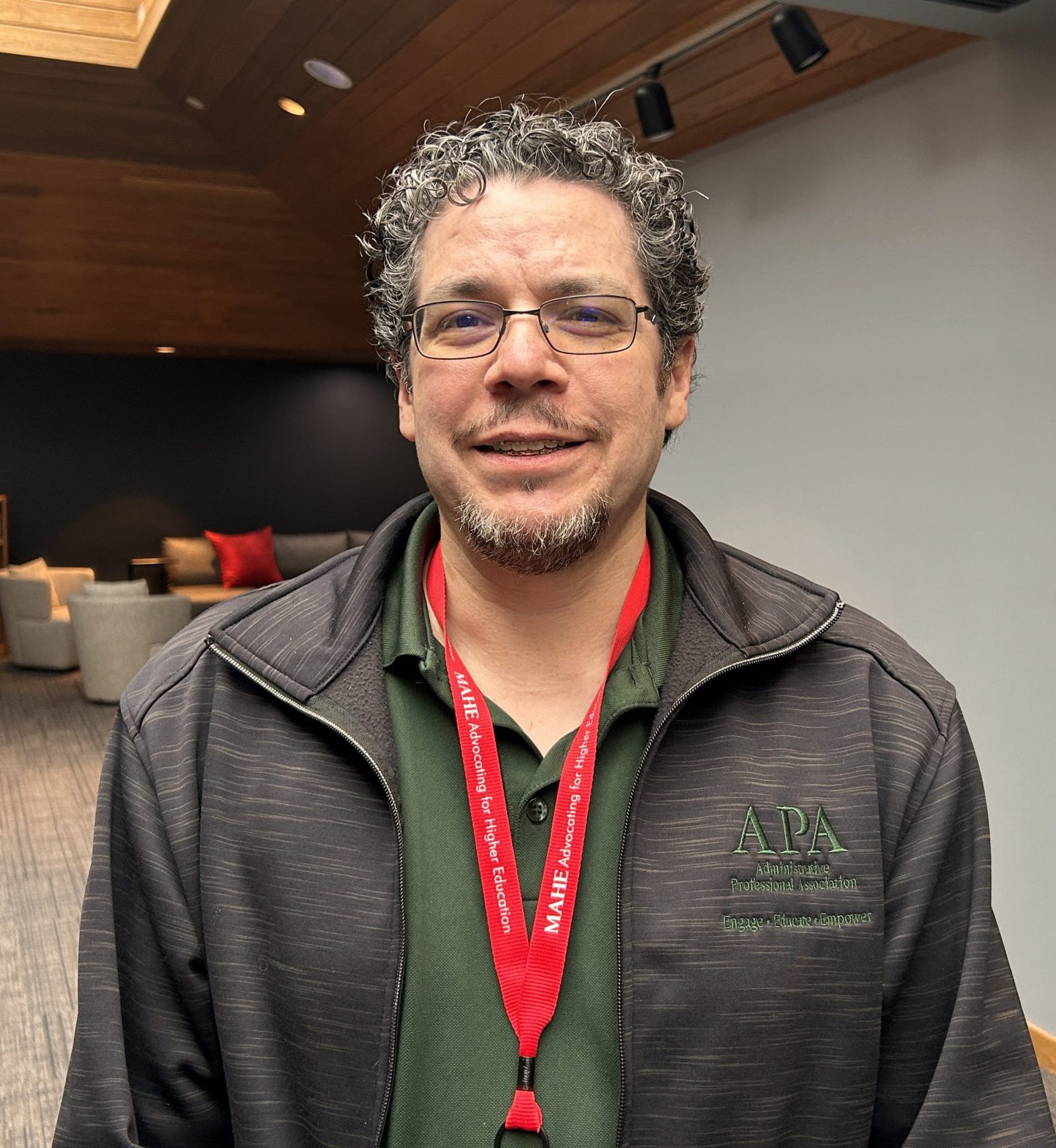
Last Friday, MEA member Jamin Villarreal found himself among other higher education leaders at a summit organized by MEA’s Michigan Association of Higher Education (MAHE) to discuss common issues and challenges across the state’s colleges and universities.
Villarreal’s participation in Friday’s MAHE Town Hall was remarkable, given he hadn’t been active in his support staff union at Michigan State University until two years ago — when “inklings” to get more involved finally spurred him to accept an invitation to a local union event.
Back then, “I was starting to feel the fire inside of me… where I need to do something; I can no longer stand by and just let it happen,” he said of his decision to take that first step and show up to a union event.
At the event two years ago, he learned of MEA’s ESP Bill of Rights campaign and became a captain in the movement to improve pay, benefits and working conditions for Education Support Professionals (ESP) who keep schools, colleges and universities running smoothly.
An administrative business analyst at MSU, Villarreal later accepted an appointment to a vacated seat on the executive board of his union, MSU-APA (Administrative Professionals Association) — a position he’s now running to retain in unit elections.
“And so that happenstance email has led into me feeling more fulfilled as a person, being able to actively participate and initiate change on whatever level that I can and that actually affects people I care about,” Villarreal said.
“Now I feel like doors are opening left and right for me to be able to make greater change and more change than I could on just an individual or one-on-one basis with people.”
The MAHE Town Hall, held at MEA headquarters in East Lansing, brought together longtime and emerging higher education leaders for wide-ranging discussion on issues that included immigration enforcement, bargaining, efforts to help more students attend college, cuts to federal research funding, attacks on academic freedom, and more.
“It’s such a great encouragement when you come to events like this, where they keep you uplifted and keep you motivated,” Villarreal said.
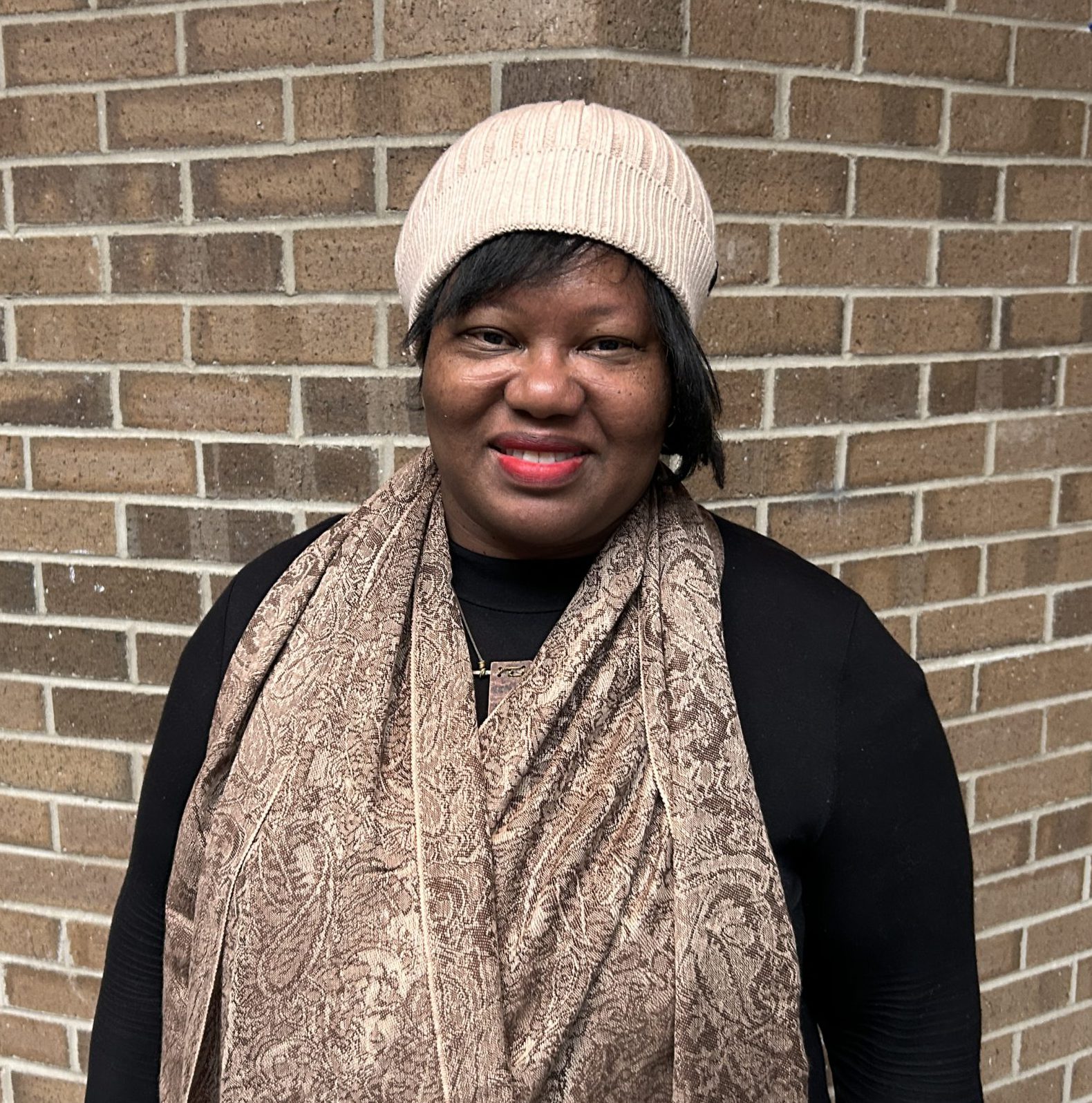
Longtime member Cynthia Thomas agreed. A professor in the communications department at Lansing Community College, Thomas said she appreciates hearing how others are handling the same problems she sees.
A part-time academic advisor, Thomas has felt disheartened talking to students of color who fear coming onto campus because of the potential for federal immigration agents to arrest them based on their appearance or spoken language. She wanted to find connection.
“I knew it would be a really good share-out in terms of what others are going through and hearing from a lot of union brethren about what they’re thinking or doing to help,” Thomas said.
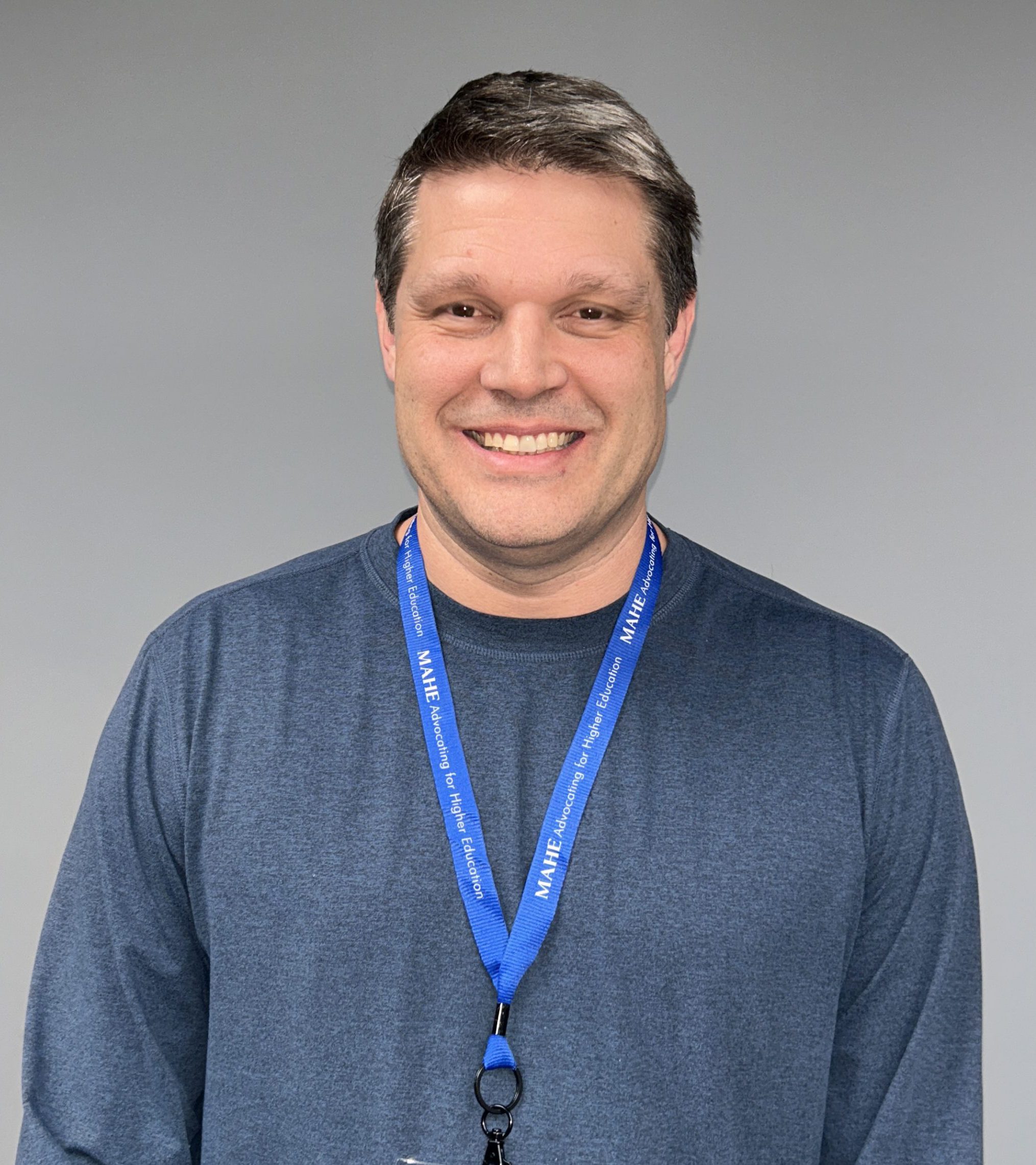
Arthur Martin, an associate professor of biology at Saginaw Valley State University (SVSU), attended a similar MAHE event a year ago and returned on Friday to see “how conversations continued to play out.”
A member of the SVSU faculty association’s bargaining team, Martin has been preparing for upcoming negotiations, so Friday’s networking gave him the chance for extended conversation with colleagues from other places.
“We were talking to somebody who finished a bargaining cycle recently, so we were getting ideas like where’d they land, how did they get there, where are their issues compared to ours and how they dealt with them differently.”
Getting together in person gives leaders a chance to build camaraderie and relationships that can extend beyond the one-day event, Martin said. “There’s so much to learn about, and we’re all kind of dealing with the same things.”
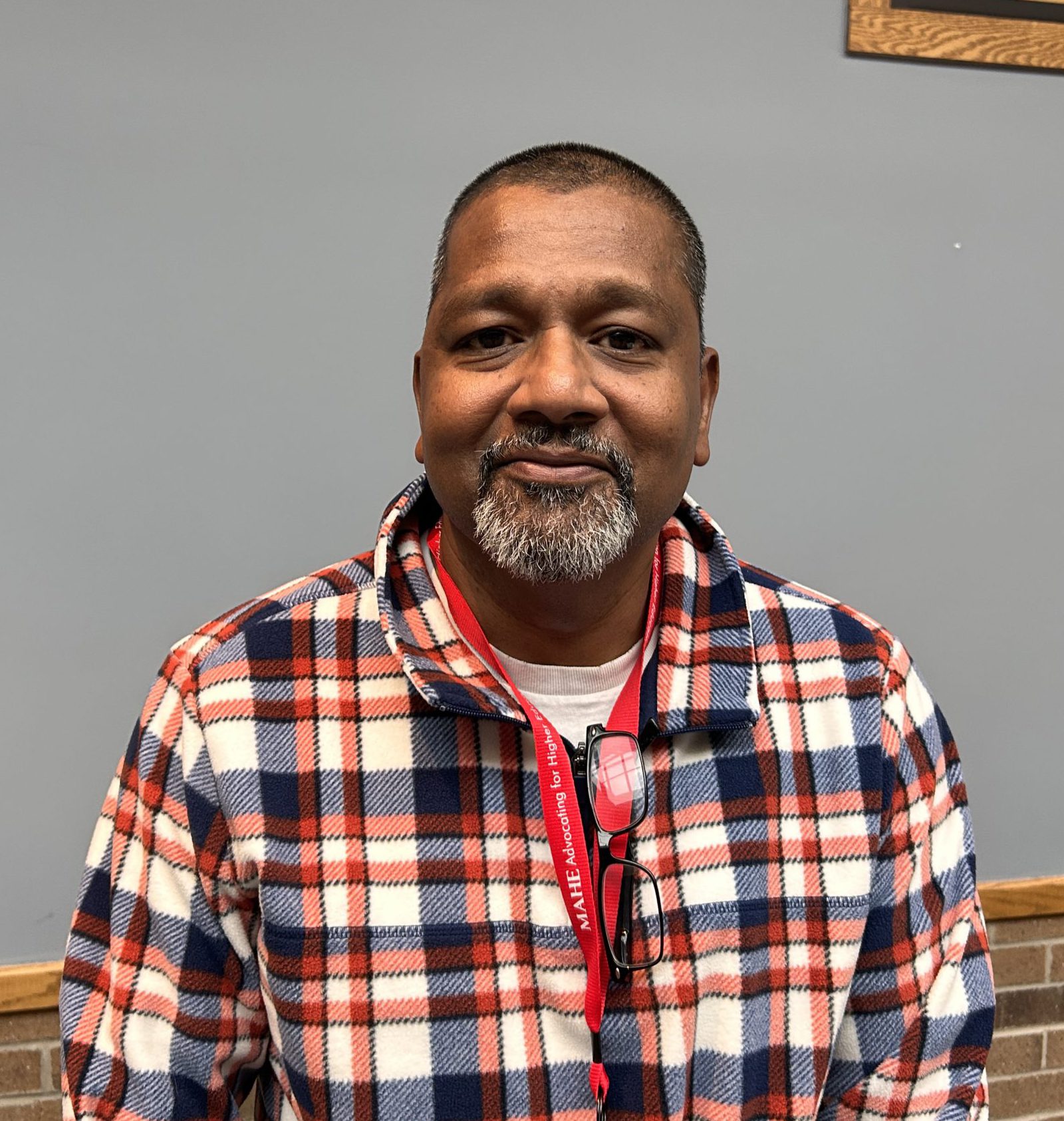
Being part of a union means the heavy load is lifted by many people, agreed Roop Jayaraman, a tenured associate professor in exercise science at Central Michigan University.
Like Villarreal, two years ago Jayaraman took on a leadership role serving on the MAHE board of directors after realizing, “if I don’t get involved now, then I have no business complaining later.”
He wanted to experience being part of a larger, collective conversation, “to give a voice to the little guy that maybe gets drowned out or feels all alone.”
Stepping up to a MAHE leadership role has been a time commitment, but building connections and strengthening ties has shown him the benefits of having union colleagues and resources to lean on, Jayaraman said.
“My biggest takeaway is we’re all in this together.”