By working together, we can help elect candidates who believe in public education
By Brenda Ortega
MEA Voice Editor
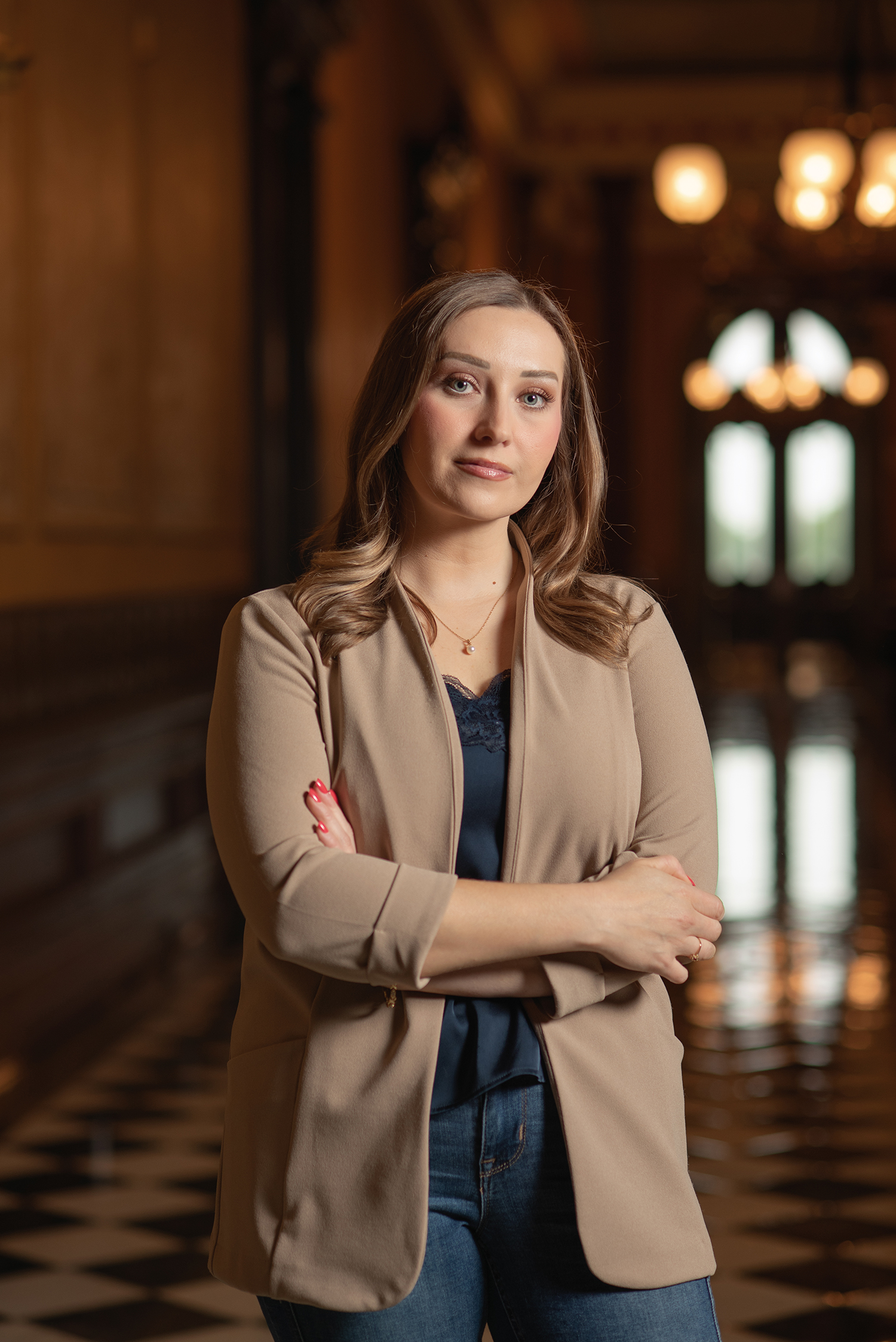
When MEA member Amanda Walker took a lead role organizing Saginaw-Midland-Bay City educators to vote in a spring special election for a vacant state senate seat, the goal was to energize everyone — but especially members who had been politically disengaged.
Walker and the team exceeded their own expectations.
“It was amazing to see people who were getting involved for the first time, who saw that it was valuable and necessary, who were willing to put in the work,” said Walker, a third-grade teacher in Bay City who starts her 13th year in the classroom this fall.
Their efforts helped MEA’s recommended candidate Chedrick Greene — a Marine combat veteran and Saginaw fire captain — secure a massive 20-point Democratic victory in a purple district that Kamala Harris won by less than one point in the 2024 presidential race.
Greene’s election filled a seat vacated by Kristen McDonald-Rivet when she became a U.S. Congresswoman and returned Democrats to a 20-18 majority in the state Senate. Greene is now seeking a full term in the position this fall.
After winning a race viewed as a Midwestern bellwether, Greene said, “We delivered this decisive victory by listening and speaking to the things keeping everyday people up at night — worries about affordability, safety, and freedom.”
But for Walker, who serves as vice president of her Bay City union, what felt like the biggest win of all was educators turning out for campaign events and volunteer shifts —some multiple times — because they’re recognizing the gravity of this historical moment and quietly stepping up.
“Educators really care about the work they do, and they really care about students, and they know the harmful effects of all of the anti-public education rhetoric and legislation we’ve been watching.”
In recent years, she said, educators have seen accelerating attacks on public education as far-right groups target school board meetings and elections, voucher schemes proliferate nationwide, and the Trump administration dismantles the federal Department of Education.
“I do think there’s been a concerted effort to dismantle public education by defunding, by diverting funds to private schools, by tearing down teachers and accusing them of all sorts of nonsense. People see it, and they feel it, and they don’t like it.
“They want to do something because they know the work they do is meaningful and valuable and they want to preserve that.”
Veteran school employees have seen the difference elections can make — shown in recent funding and policy improvements made after we helped to elect a pro-public education governor and Legislature.
“Decisions at the local level, in Lansing, or at the federal level all impact what we do in the classroom, if kids are getting fed or not, if we have quality books and curriculum, if working conditions are good.
“Teaching opened my eyes to how personal politics can be when you live it every single day.”
Education experts
With just eight weeks to build momentum in a tightly competitive district, Walker assembled an organizing team of five other educators: Anne Holey and Carissa Lough from Bay City, Ana Geib and Sarah Valley from Midland, and Crystal Swanson from Saginaw.
They started by surveying MEA members in their locals to gauge current political awareness and involvement, along with ways in which people might be willing to join the effort. Survey respondents said they didn’t want to door-knock but preferred gatherings in-person.
“A lot of responses on the survey were people saying, ‘I don’t know enough to get involved,’” Walker said. “So the question was how do we make it accessible and comfortable for people of all levels to expand their advocacy work?”
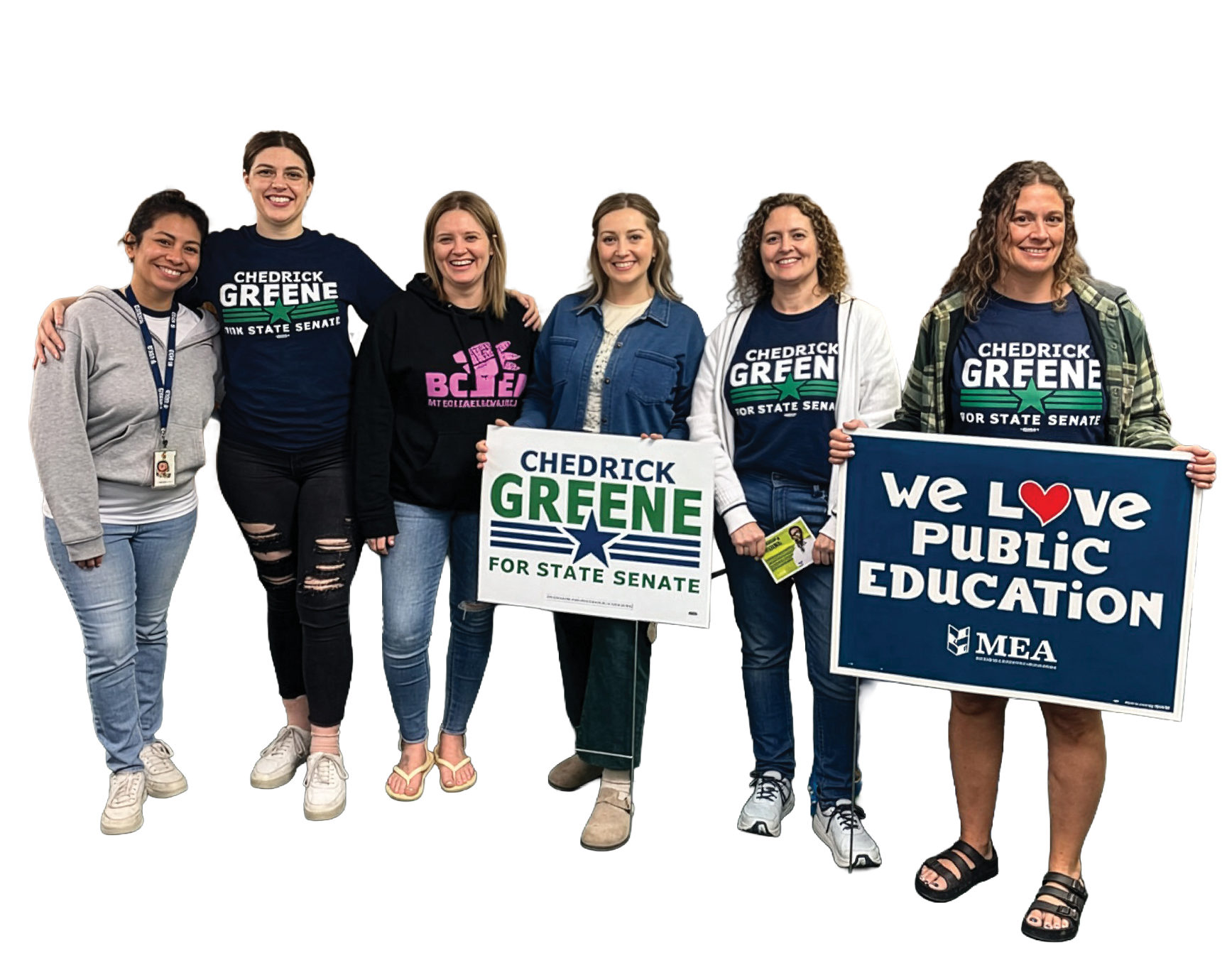 The highest-rated campaign activity from the survey was a candidate meet-and-greet, so the organizers quickly put one together and held conversations to encourage attendance. Their message was simple, Walker said.
“What we talked about a lot is you don’t need to be an expert in everything politics and policy. You’re an expert in your classroom, and you’re an expert on your students. You’re an expert in your building, and you’re an expert on your experiences as an educator.
“We are the education experts. But if we don’t have a seat at the table to talk about those issues, then our interests won’t be represented.”
With the help of MEA Political Organizer Jessica Lumbreras, the team used polling data to choose a meeting location where they hoped to raise voter turnout and awareness of Greene, then used digital tools to track signups and send event reminders.
The meet-and-greet was held at a brewery in Saginaw. A member new to political activism opened the event by sharing her story, followed by brief remarks from Greene, but mostly the candidate sat with people and listened to their concerns, needs and ideas.
“That was the best part — just him sitting at tables and talking to people,” Walker said, “because what we wanted our members to say is this is what we’re dealing with, and this is what we do that’s really great, and this is what we need to make our work even better.”
For Greene, born and raised in Saginaw, those kinds of conversations were the best part of campaigning. He talked about his background and values — 27 years in the Saginaw fire department, 30 years in the U.S. Marine Corps Reserves, two-time Iraq War veteran.
A lifelong believer in the power of public education to expand opportunities, he had been honored to receive the MEA recommendation from a local screening committee of members who interviewed candidates. Now he wanted to listen.
“Besides me introducing myself, I wanted to hear from everyday people who make our communities strong, the workers that are doing everything and still can’t get ahead,” he said. “I asked them to give me their thoughts on what they want in an elected leader.
“I asked, ‘What concerns you? What are you looking for?’ And all I did was listen.”
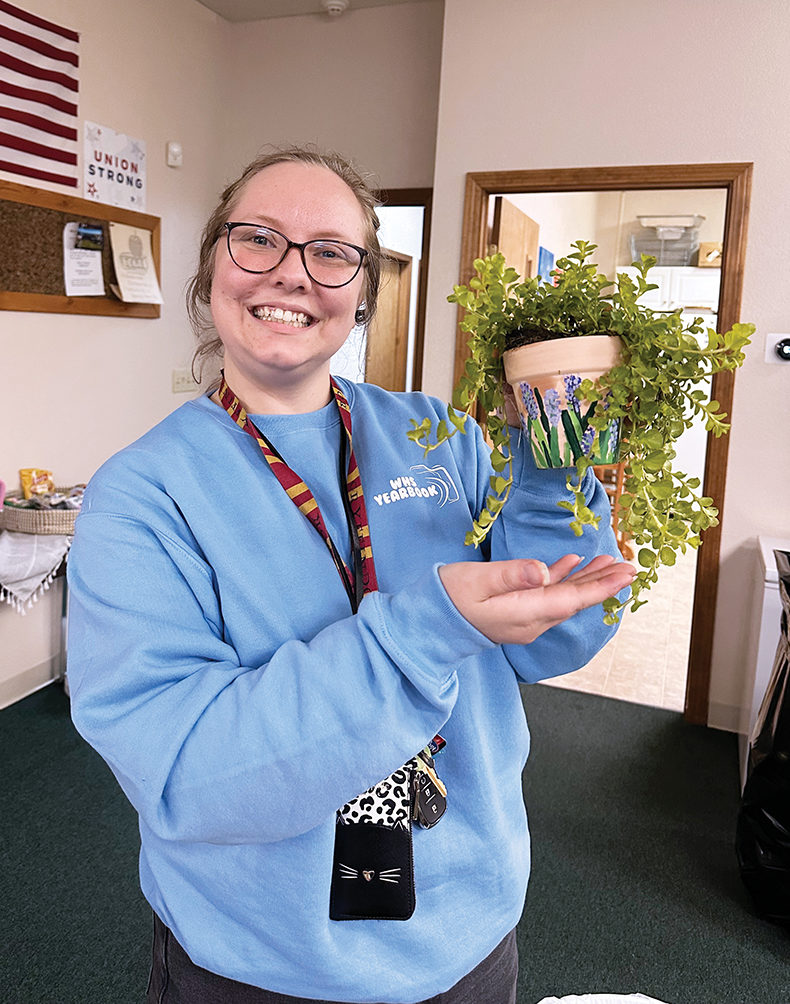
After that success, the team responded to survey requests to tie volunteer work with something fun and crafty by planning a postcards and potted-plant-painting event. “I thought it was a little unique, but the room was packed and people really liked it,” Walker said.
Everyone went home with a potted plant they decorated, and some won prize drawings based on how many postcards they hand-wrote encouraging fellow MEA members to show up to the polls on May 5, vote for Greene, and talk to friends and family about the election.
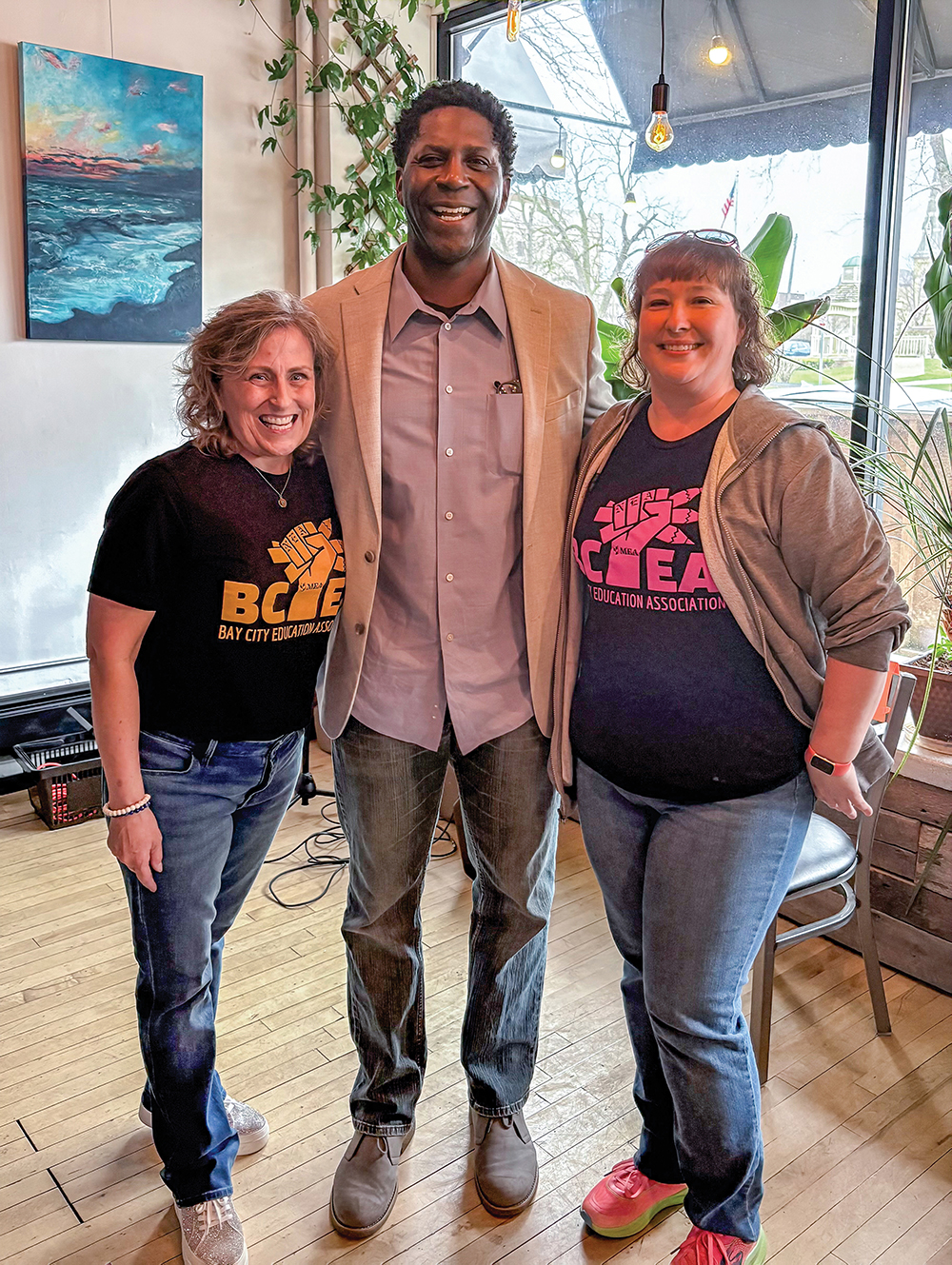
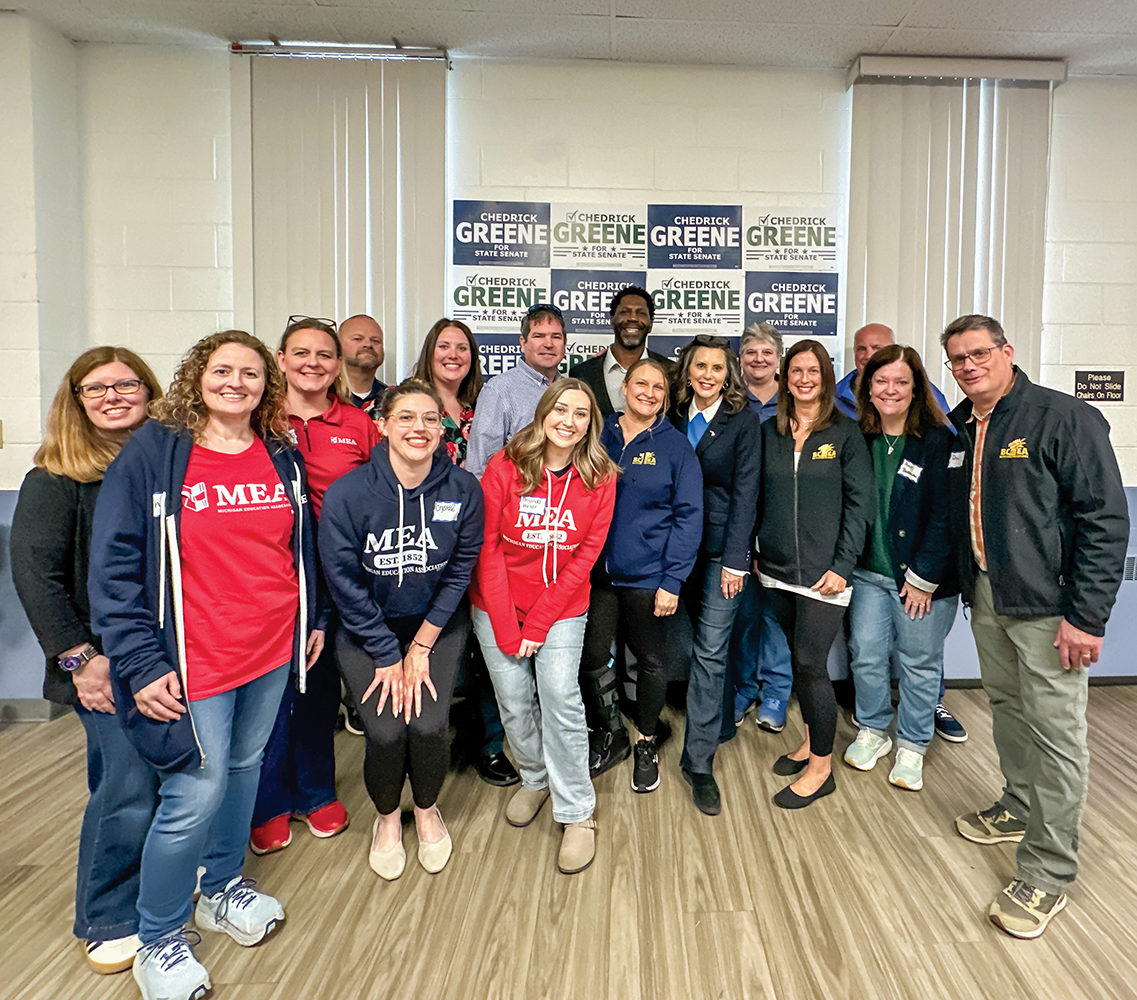
Next the team organized turnout for a rally with Greene and guest Gov. Whitmer, and Walker was gratified by the result: “It was really cool, because MEA had the most people in attendance at the rally among the many different labor groups that were there.”
 Finally, member-volunteers made hundreds of phone calls and sent thousands of texts and emails to voters from a phone banking event combined with mutual aid — participants brought personal hygiene items to be donated to the Saginaw Veterans Administration hospital.
Educators who showed up became empowered to communicate with people they knew about why the election mattered and Greene was the right choice — a tool called “relational organizing” that builds power from collective strength.
“We got responses back from teachers that were like, ‘I’ve never voted; what do I need to know?’” Walker said. “Or they said, ‘Can you help me find my polling location?’ On election day, I loved getting texts saying, ‘I voted today!’ Oh my gosh, I felt like a proud mom.”
After winning by such an impressive margin, Greene said: “I’m excited to go to Lansing to fight for every policy and dollar that helps hardworking men and women build better lives in Bay, Midland, and Saginaw counties and sets our kids up for brighter futures.”
It’s important to recognize the exponential effects of joining one voice with many and building out from there, said Lumbreras, the MEA political organizer. “Educators sometimes forget how much they’re valued and respected in the middle of all the noise,” she added.
“More than ever before, in this time of billionaire dark money and AI deepfakes, people are looking to trusted voices to get information and to build up their real-life understanding, connections and community.”
Make a difference
The organizing effort was hard work and a team product, Walker stressed.

“My group was amazing, and they did so much good work that I hope people feel inspired by it. You don’t need to be the smartest political person in the world to do something like this. It can be replicated in other places.”
Just as teaching third grade lets her make a positive difference in the lives of children and families every day, becoming an activist for the profession satisfies a desire to make the world a better place for young people to inhabit.
“I love teaching third graders because I get little kids and help them become big kids,” she said. “It’s a year where they go from being concrete thinkers to abstract thinkers. A whole new world opens up to them, and it’s an honor to be the person who helps them navigate that period.
“The job has meaning, and I have to have that in my life. And I think I engage in political action for the same reason — I have to do something that makes a difference.”
In the first few years of her career in Bay City Public Schools, where she grew up, Walker did not join the union. She didn’t know much about unions or workers’ rights, but she listened to more experienced colleagues who were not only members but engaged and active.
“They were telling me all about what the union does and what it can do for me and what it does for us collectively, and I’m like ‘This is my thing. Why didn’t I join right away?’”
Ever since then, she has made up for lost time, serving in various roles in her local union and recently getting elected to a seat on the MEA Board of Directors.
“If I had to come up with a takeaway from my story, it’s that you can get involved no matter what — and now is always a good time to do it.”
Related Story: Teacher-organizer, candidate connected by policy