Educators prepare for literacy changes
By Brenda Ortega
MEA Voice Editor
As in most stories of change, the timeline of MEA member David Pelc’s teaching transformation marks a few key events building up to the pivotal moment.

Early on, a volunteer experience spent reading books with youngsters in disadvantaged communities hooked him on the joys of teaching and spurred him to become an educator.
Later, burnout settled in after 16 years of teaching at an elementary school in Romulus and feeling exhausted by facing greater needs than he could meet.
After switching roles to become a reading interventionist, expecting to be renewed by working one-on-one or in small groups, he grew frustrated by ineffective curriculum he was supplied — much like other districts used.
Finally, at the start of the COVID-19 pandemic, Pelc’s sense of inadequacy became too much to bear as he tried to teach the youngest students, who were struggling to learn foundational reading skills, from the other side of a computer screen.
It was hard to schedule meeting times with kids on his caseload. Some showed up only sporadically. He kept teaching the same sight words to the same kids who weren’t getting it.
“That was probably the heart of defeat for me,” he said. “That’s where I started going to the internet and just trying to find different things that would work, and I started talking to people online and looking up things.”
Pelc read work by researcher David Kilpatrick, emeritus professor at New York State University College at Cortland. “I always knew about phonemic awareness, but I didn’t understand how strong of a predictor it is for reading success. And I didn’t know how to practice it.”
One exploration led to another. Then, “I came across the famous Facebook page,” he said.
The private Facebook group he joined, Science of Reading-What I Should Have Learned in College, today boasts 243,000 members. In 2020, it was a year old and growing.
“It was the best professional development. They hosted free webinars. They would support you when you asked questions about different programs. People were generously sharing resources, sharing slides. Somebody bought me a set of decodables.”
So began a multi-year effort to change how he taught kids to read. In 2022 Pelc took what many consider to be the Cadillac of trainings — LETRS — previously out of his financial reach, made available through a grant from the Michigan Department of Education (MDE). (See related story.)
The next year, he took a no-cost, grant-funded training through his intermediate school district — Wayne RESA — on a good-quality scope and sequence program, UFLI Foundations, from the University of Florida Literacy Institute. Pelc then crowd-sourced funding to get certified in EBLI (Evidence-Based Literacy Instruction).
Seeing results with students kept up his motivation to continue learning and shifting his practice, Pelc said. “Unfortunately, it’s complicated and messy. I wish it wasn’t, but it is.”
To help others, Pelc started one of many state-level offshoots of the original Facebook group. Michigan Science of Reading-What I Should Have Learned in College now has 4,300 members.
His experiences have taught him how policymakers and school leaders should approach implementation of new laws aimed at improving reading instruction and literacy outcomes.
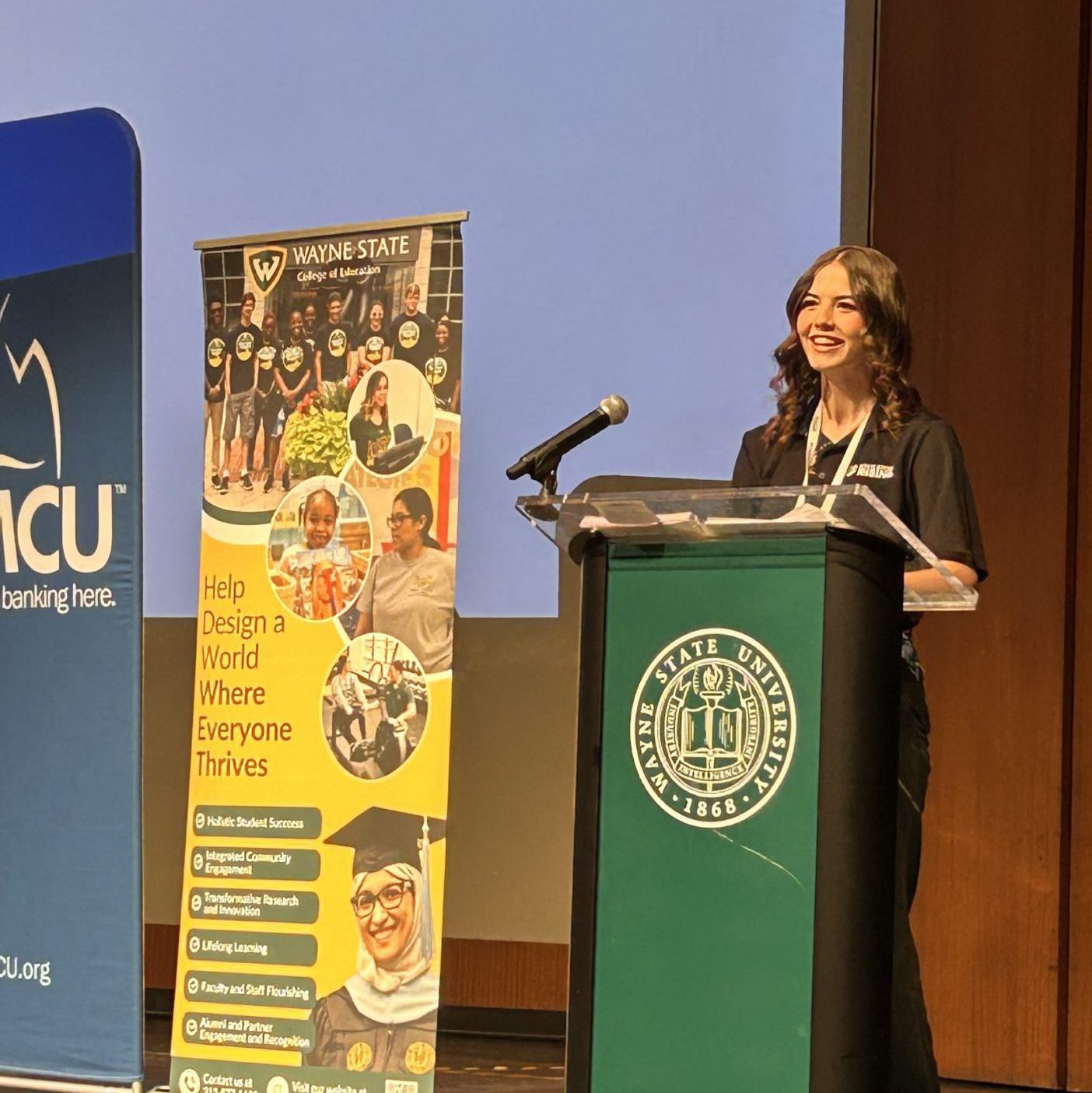
That expertise got Pelc invited to join a panel discussion at an all-day Literacy Summit at the Michigan Science Center in Detroit, part of Gov. Gretchen Whitmer’s push to make literacy a top priority of her last year in office. (See related story.)
“We need systems that develop, coach and support teachers and don’t overwhelm them,” Pelc told nearly 300 education, business and non-profit leaders at the summit in December. “We must create a safe learning environment… and we have to pay educators for their extra time.”
VOICES FROM THE FIELD
MEA member Ashleigh Burry agrees it’s more important to invest in educators and their knowledge than expensive curricula stamped with the latest terminology.

The 20-year classroom veteran and Novi elementary teacher stressed the science of reading is an important body of research — not a commercial program. “That’s my number-one message,” she said in an interview. “Curriculum doesn’t teach kids. Teachers do.”
Her nuanced view as a literacy teacher reflects the wariness of educators pushed and pulled in the so-called “Reading Wars,” a decades-long debate over methods: phonics vs. whole language, decoding vs. immersion in high-interest content and authentic tasks.
The answer is not either-or; it’s both-and, Burry said.
She acknowledged that many preservice teachers in college — herself included — were not adequately taught how to do explicit phonics instruction in favor of teaching kids to decipher an unfamiliar word through context clues.
She soon learned readers need it all: phonics plus meaning and motivation, she said.
“I don’t know that there’s disagreement about whether we need both explicit instruction and the kinds of experiences with literature that make us think and feel and love to read. Reading is knowledge. My goal has always been to help my students become readers and enjoy reading.”
In recent years, more than 40 states, including Michigan, have passed laws requiring research-based reading instruction, following years of flat reading test scores nationwide and a growing equity gap between students from high and low socioeconomic backgrounds.
Like Pelc, Burry is completing free LETRS training through the MDE, an expensive and time-consuming course — requiring 160 hours over two years to finish — which is not a curriculum but instead delves into the latest research on how the brain learns to read.
LETRS, or Language Essentials for Teachers of Reading and Spelling, covers the “why” and the “how” of best practices, empowering educators to better understand how to evaluate, diagnose and address students’ reading difficulties.
When she finishes, Burry will move up one lane on the salary schedule with the credits earned.
Meanwhile, she’s piloting structured literacy programs, which feature a systematic, sequential method for teaching reading skills: sounds, sound-symbol awareness, syllables, word parts, syntax, and meaning.
Ultimately the goal remains to have highly skilled, well-trained educators, equipped with good-quality tools, who can help kids develop all of the essential literacy skills, from decoding to fluency, vocabulary and comprehension — with reading enjoyment.
“As a profession, we need to be able to adapt on the spot,” she said. “As a teacher, I need to do what works with the kids that are in front of me. To do that, we need training and support to keep up with the most current information.”
Literacy coach Patricia Clancy echoed Burry’s thoughts. Job-embedded professional training for educators is the key to strengthening reading instruction, she said. Teachers’ knowledge, expertise and decision-making are the most critical factors for fostering student success.
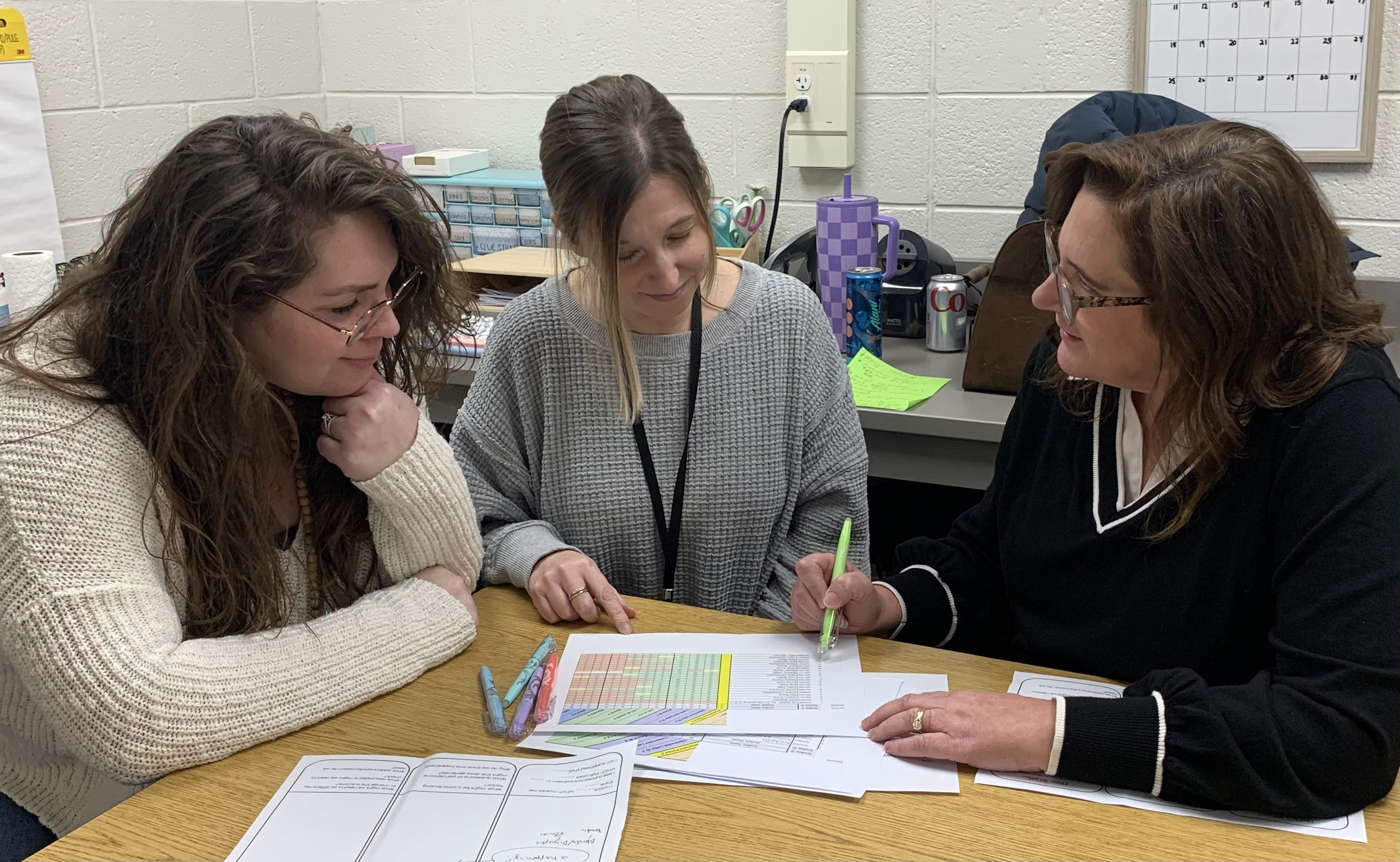
“If you look at the research on LETRS and where it’s been effective, in all of that research it’s always been paired with coaching,” Clancy said. “Teachers need support to apply their learning. It’s the teacher that matters.”
A longtime educator and MEA member who has been a classroom teacher, an interventionist, and now works as a state-funded ISD early literacy coach in Midland, Clancy has been around long enough — 36 years — to recall Reading First, a six-year $1 billion federal push to shift K-3 reading instruction toward research-based practices.
Part of President George W. Bush’s No Child Left Behind Act of 2001, Reading First became mired in allegations that states and districts were pushed to adopt poor-quality teaching programs by consultants who benefited financially. Major studies showed few reading comprehension gains.
Clancy wants to make sure the focus stays on empowering educators and maintaining local control over curricular choices. Top-down mandates and vendor-driven, one-size-fits-all, scripted curricula do not work, she said.
In December, the MDE issued initial lists of two assessments for screening and monitoring for dyslexia and 14 tier-1, class-wide reading curricula approved for use by districts beginning in the 2027-28 school year. The lists were required under the reading law passed in 2024.
Additional periods to submit assessments and curricula for review and potential inclusion on the lists run through the end of September. Find information about how to submit an assessment or curriculum for review on the literacy and dyslexia webpage at michigan.gov.
The state’s funding of LETRS training and emphasis on literacy coaching are positive trends in the right direction, Clancy said, adding another bright spot has been the development of more decodable texts that are engaging and fun to read.
“Coupled with the Literacy Essentials, teachers now have the tools they need to focus their instruction on the practices that reading science has shown to work.”
Michigan Literacy Essential Practices are a state-adopted set of instructional practices to improve literacy outcomes for young learners. Developed and updated by the Michigan Association of Intermediate School Administrators (MAISA) in collaboration with educators and literacy experts, these practices define a minimum standard of effective literacy instruction that should occur in every classroom, every day. These practices are not a curriculum but a framework grounded in decades of research.
“Don’t get me wrong; having good-quality curriculum is important,” Clancy said. “But what matters most is teachers’ understanding of how children become literate and the decisions that they make in those discretionary spaces.”
MEA member Rebecca Farlee is a new literacy coach this year in Montcalm County’s Carson City-Crystal schools, a mid-Michigan district of just under 1,000 students. A 25-year veteran teacher, Farlee moved into the role to help prepare for changes under the new literacy laws. (See related story.)
So far Farlee has focused on building trust among the elementary teachers she serves by listening to what they need and delivering resources that include ready-to-use lessons and materials. She also does regular classroom read-alouds and related activities.
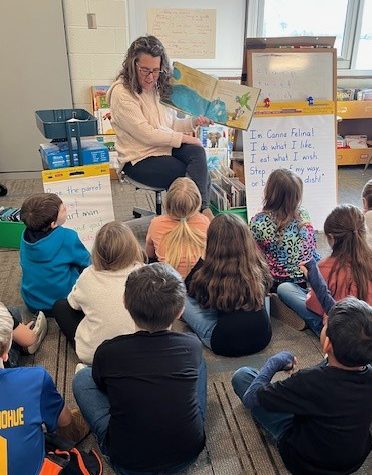
“Read-alouds have been a super fun part of the role that is the perfect opportunity to model,” she said. “They can be a valuable way to build (kids’) foundational skills but also language comprehension pieces — building background knowledge, building vocabulary.”
Like all teachers, Farlee has continued learning throughout her career and now is finishing up a master’s degree in reading. She has long understood the importance of phonics; early on she was trained in the Orton-Gillingham approach for students with learning difficulties.
“The science of reading is real, and it’s here to stay,” she said. “I don’t think it’s a pendulum swing. The research has been there for a long, long time, and it has been ignored for a long, long time.”
The LETRS training she recently completed has been more valuable than any course she’s taken through her degree programs, Farlee said. Nothing she learned, however, changes her reason for being with students.
“My number-one goal is to get kids to love reading, to love books — and giving them choice in what they want to read and giving them time to do it.”
To that end, she also hopes eventually to take on the task of trying to revitalize the school’s library as part of her coaching role. Since the district no longer has a certified librarian, use of the library has dwindled and the book collection has stagnated.
“There’s data out there showing that schools with a librarian have higher test scores,” she said. “It’s sort of been my mantra: if literacy is valued, then the first thing you see when you walk in the door should be text — words, books, stories.”
Leaders from the Michigan Association of School Librarians (MASL) validate Farlee’s assertion, yet only 9% of school buildings in Michigan have a full-time certified school librarian, ranking the state 46th in the nation in librarian-to-student ratio. (See related story.)
First-grade teacher Alicia Becker can relate to knowing what’s missing but not having power to fix it. A longtime MEA member in Oakland County’s Hazel Park, who has taught everything up to eighth grade and reading intervention, Becker lamented that educators’ “hands were tied” for years.
“Depending on what district you taught in, for a long time we were mandated to teach programs that didn’t have much if any phonics in them,” she said. “It’s very frustrating; teachers should have some autonomy over how they teach in their classrooms.”
In years past, teachers would return from professional development sessions that covered evidence-based practices and be told to keep with the approved curriculum even though it didn’t fully align with the research, Becker said.
Since then, Becker and other Hazel Park educators have completed LETRS training, for which the district used state grant money to pay each a $1,000 stipend upon completion. In addition, Becker used the credits to advance a lane on the salary schedule to master’s plus 15.
LETRS was fascinating, and Becker experienced “lots of lightbulb moments,” she said. It was exciting to learn about explicit teaching practices that could fill some gaps in her knowledge — and to have the ability to put new ideas into practice.
That is not to say phonics is a be-all, end-all solution to improving literacy, or that deeper, more advanced skills aren’t as important, she added.
“Out of my whole morning, I spend about 40 minutes doing phonics. It’s just one piece of the foundational blocks that kids need, but for a long time we were not teaching it in a systematic way every day.”
MEA member Julie VanLier faced similar frustrations as a kindergarten teacher in Kentwood schools when she moved from a building that served an affluent part of the 9,500-student district to a school in a high-poverty area.
The literacy approaches she’d always used no longer worked. Students needed more support, but she didn’t know how to provide it. Seeking answers, she discovered EBLI (Evidence-Based Literacy Instruction) and paid out-of-pocket to take a course and become certified.
Several years later, VanLier said 95-100% of her kindergartners learn to read. Not only that, student behavior problems decreased. Now she’s a passionate advocate who helps others when they ask for guidance and helps to tutor struggling older students in her prep time.
“Changing what I did wasn’t easy; I had to push aside a lot of ingrained beliefs,” VanLier said. “But when I changed, I saw huge differences.”
Founded 25 years ago in Genesee County, EBLI uses a speech-to-text model that proponents say works with struggling readers of any age. Rather than beginning with letters-to-sounds, this approach starts with sounds and shows letter combinations to make them.
VanLier contends that educators shifting their methods to evidence-based practices should expect to feel uncomfortable at first, because changes to core teaching practices need to be more than surface level — instead transformative. “For me, it’s been life-changing.”
She believes the biggest obstacle to the state’s initiative to improve literacy is school districts purchasing teaching materials that only superficially embrace labels and buzzwords without truly giving classroom teachers the knowledge and tools for mastery.
Armed with in-depth understanding of how children learn to read, VanLier said she only needs whiteboards, dry-erase markers and magnetic letters for every child to grasp phonics.
“It’s such a paradigm shift. My kids now can do harder things than what kids at my old school could have done from a higher socio-economic status. And the difference is how I go about teaching them.”
MEA member Morgan Raether hears talk of phonics and knows how critical it is for readers to have that foundation. It’s the focus of her job to help boost literacy skills at the secondary level in Adams Township schools in Painesdale, outside of Houghton in the Upper Peninsula.
Raether is in her second year as a reading specialist for the combined middle-high school where she has taught English and German for 12 years. Because not as many resources exist for secondary-level reading specialists, she’s been designing the role as she goes.
She was part-time and reactive in the first year, providing one-on-one support to students who were struggling to read and write. This year, she’s also added a more proactive approach — leading professional development promoting cross-curricular strategies.
“A lot of non-English teachers think they don’t need to teach kids how to read by the time they’re in middle school or high school, but it takes a different process to read, comprehend and analyze a math book versus a social studies text versus a historical document.”
Raether presents strategies that cut across subjects and offers materials others can use or adapt to their needs. “Reading and writing is for everybody to teach about because there are so many different types of text — and so much information — that our students need to be able to comprehend and use.”
TO SUM IT ALL UP
It takes vulnerability for educators to change teaching practices, says David Pelc, the educator from Romulus who shared his science of reading journey at the governor’s Literacy Summit.
“We teachers lose sleep over kids not making progress. The most frustrating feeling is not knowing how to help struggling readers.”
For him, learning and making shifts in practice meant confronting sadness for kids he could have helped if he’d known what to do sooner. He turned it into motivation.
“Then I lost more sleep — because I was waking up really early to keep learning. My wife was like, ‘What are you doing up at four o’clock in the morning?”
Educators need consistency, resources, support and respect, Pelc told summit participants.
“Educators need time to practice and get good at this work. We need to have knowledgeable educators turning into leaders and mentors, and this is probably the most important — we need administrators that understand what good instruction looks like.
“Everyone needs to get involved; it’s going to take a collective effort, but it gives me great hope for Michigan because this is what we’re doing today.”
Related Stories: