
MEA leads first-of-its-kind training bootcamp for hundreds of paraprofessionals
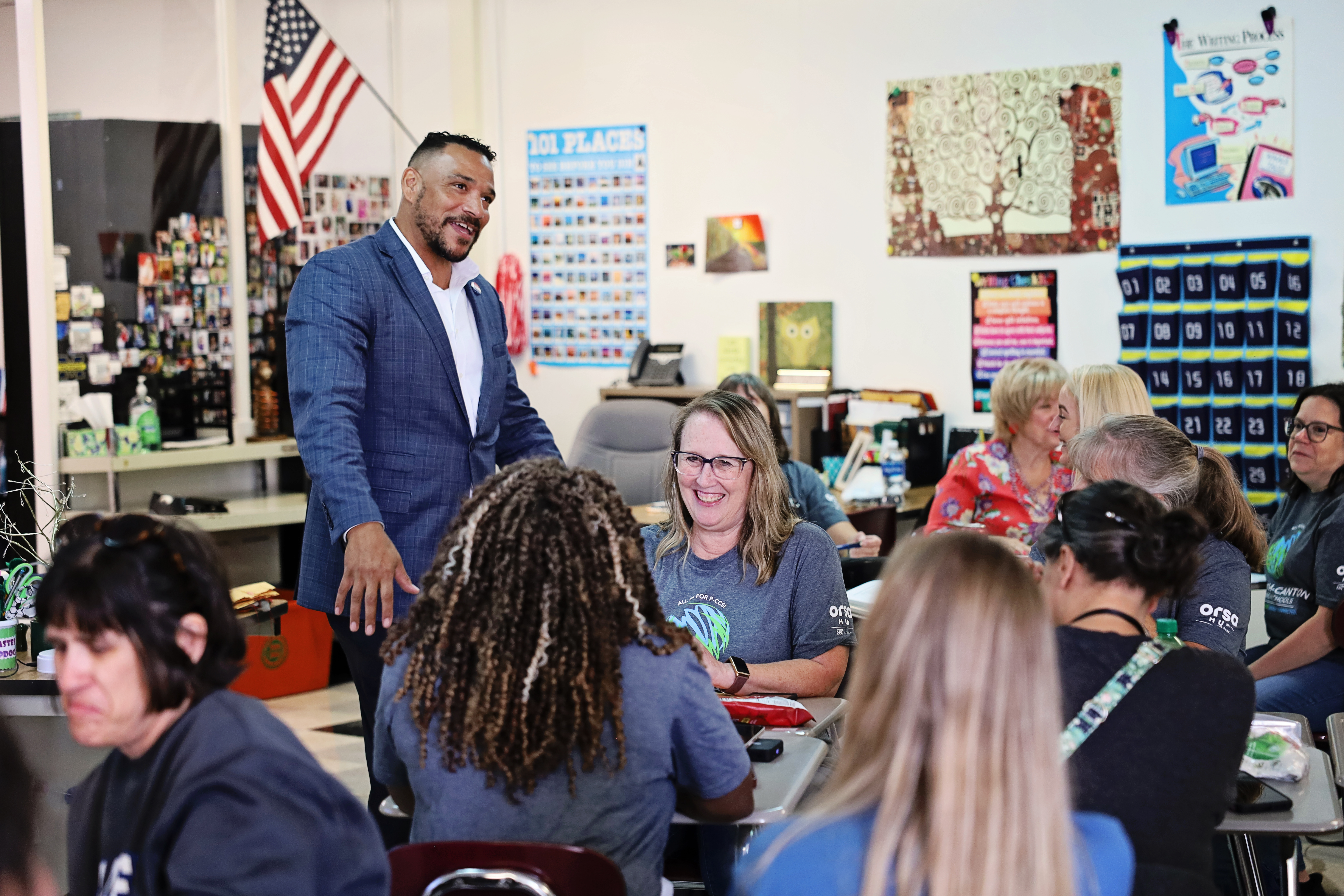
MEA member Aaron Bailey knows what it is like to be a brand-new paraprofessional in a classroom at the beginning of the school year.
“When I first started, I had very little training, and I was lucky enough to get teachers who had 10 or 15 years of experience and could take the time to teach me and run the classroom,” said Bailey, who’s worked in Plymouth-Canton Community Schools for about a decade. “A lot of people don’t have that [anymore].”
MEA is working to change that by providing training and professional development opportunities for paraprofessionals, who are often overlooked but perform critical work in schools throughout Michigan.
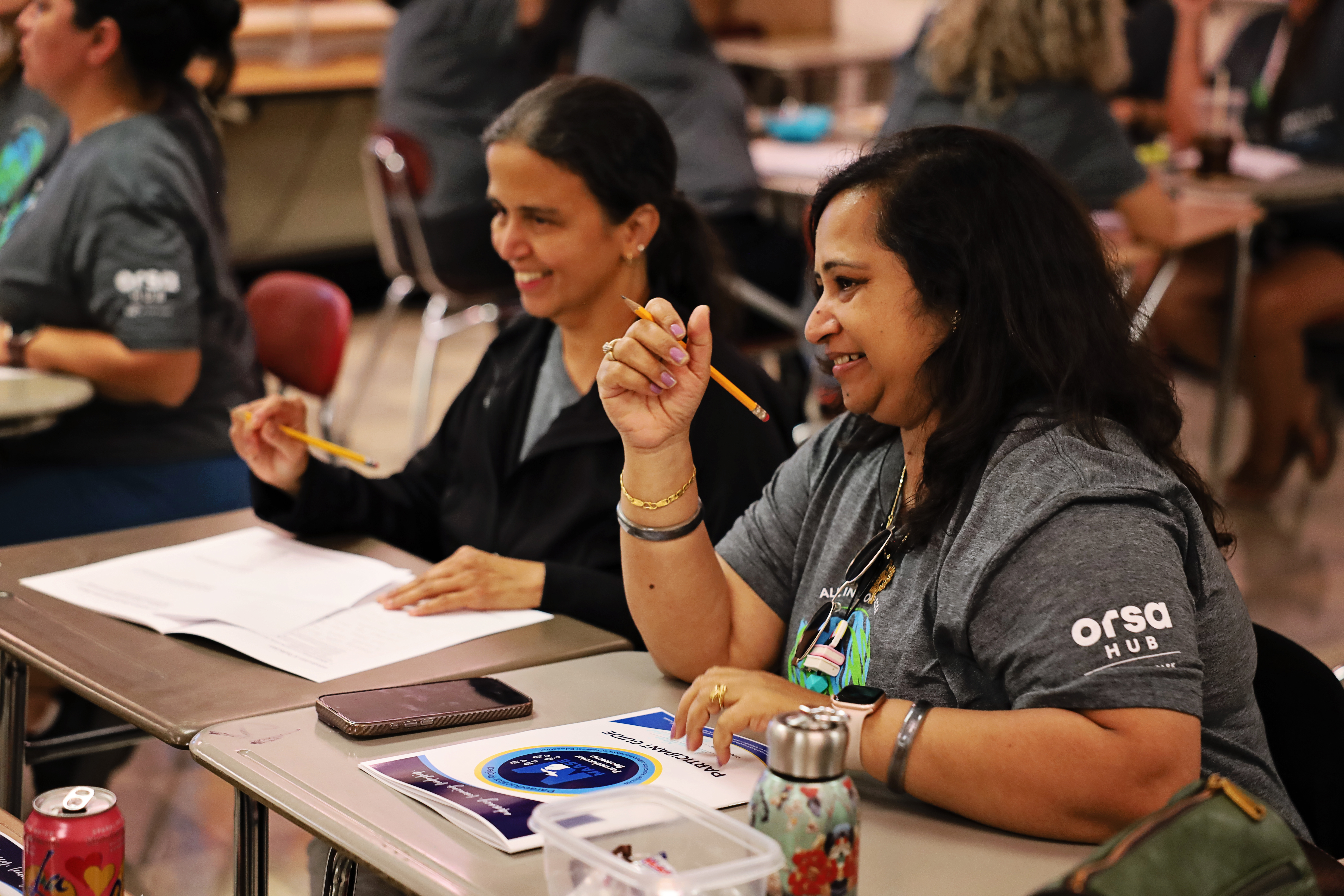
Bailey and more than 300 other paraprofessionals joined together at the Plymouth-Canton Educational Park on Aug. 26 for the inaugural “Paraeducator Bootcamp,” a training co-organized by MEA and centered on research-backed practices in special education, along with practical tools and strategies to effectively support students with disabilities.
The goal of the training, launched in partnership with the Michigan Association of Administrators of Special Education and OPTIMISE, “is to make sure education support professionals have access to meaningful professional learning and the tools, voice and respect they deserve,” said MEA President and CEO Chandra Madafferi, a former special education teacher who’s helped lead the effort.
OPTIMISE (“Opening the Pipeline of Talent Into Michigan’s Special Education”) is a state initiative that aims to effectively attract, prepare and retain a qualified and diverse special education workforce that can help students with disabilities fulfill their full potential.
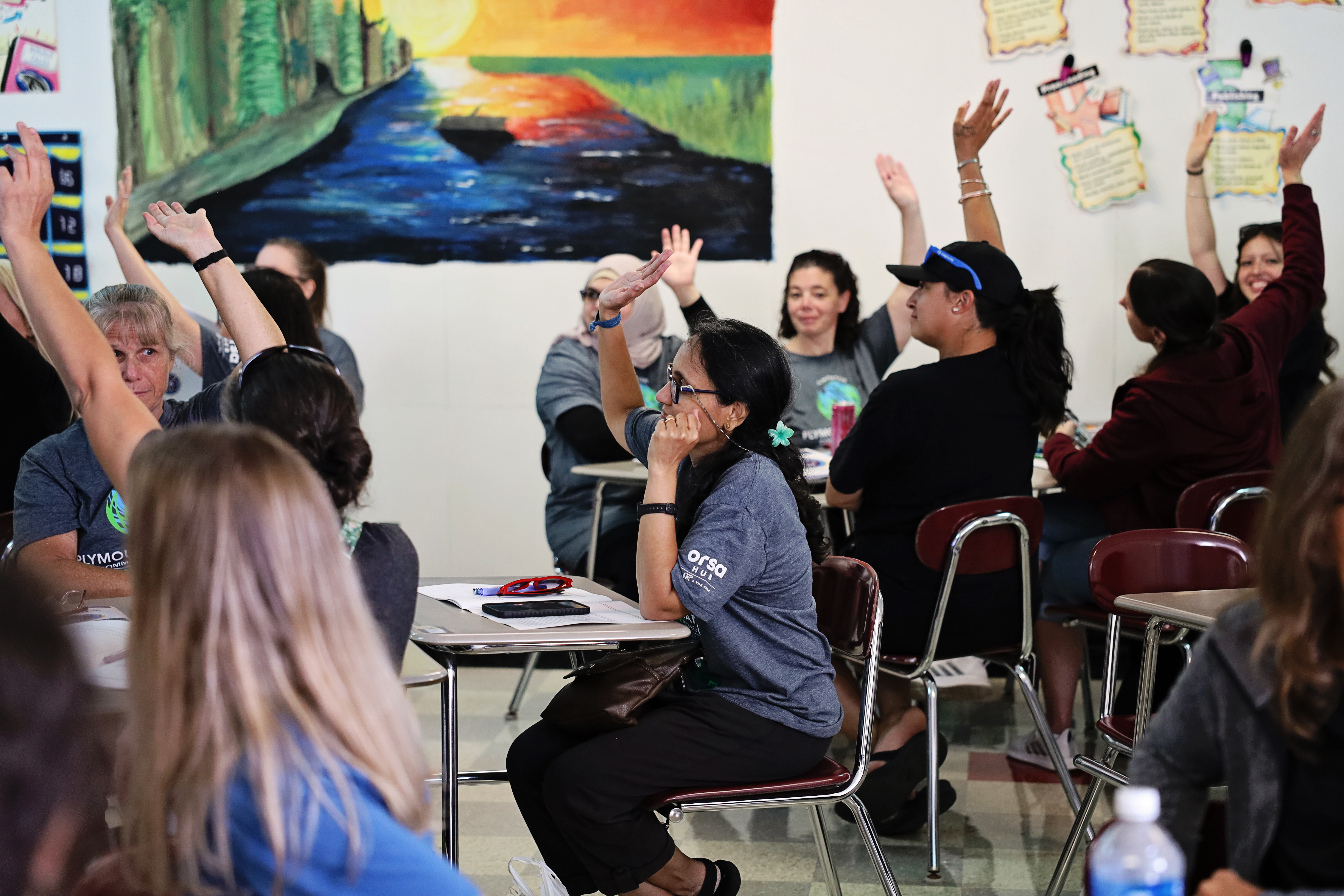
“We can’t support students if our paras don’t have the knowledge and the training to support the students,” said Mary Connor, an elementary school paraprofessional and president of the Plymouth-Canton Paraprofessional Association.
Plymouth-Canton paraprofessional and MEA member Christine Wyman said she’s confident the training will have a significant impact for attendees and students alike.
“The students are the most important thing here, and the students do better when they are taught and cared for by people who know what they’re doing,” Wyman said.
For Bailey, the value of starting the school year with this training is simple.
“We talked a lot this morning about the baggage that educators can bring into the classroom,” Bailey said, referencing the stress and burnout felt by too many educators. “Training helps focus you. It helps you set aside that baggage.”
“Happy educators make happy students.”