Fraser paraeducator wins MEA award: ‘Our perspective matters’
By Brenda Ortega
MEA Voice Editor
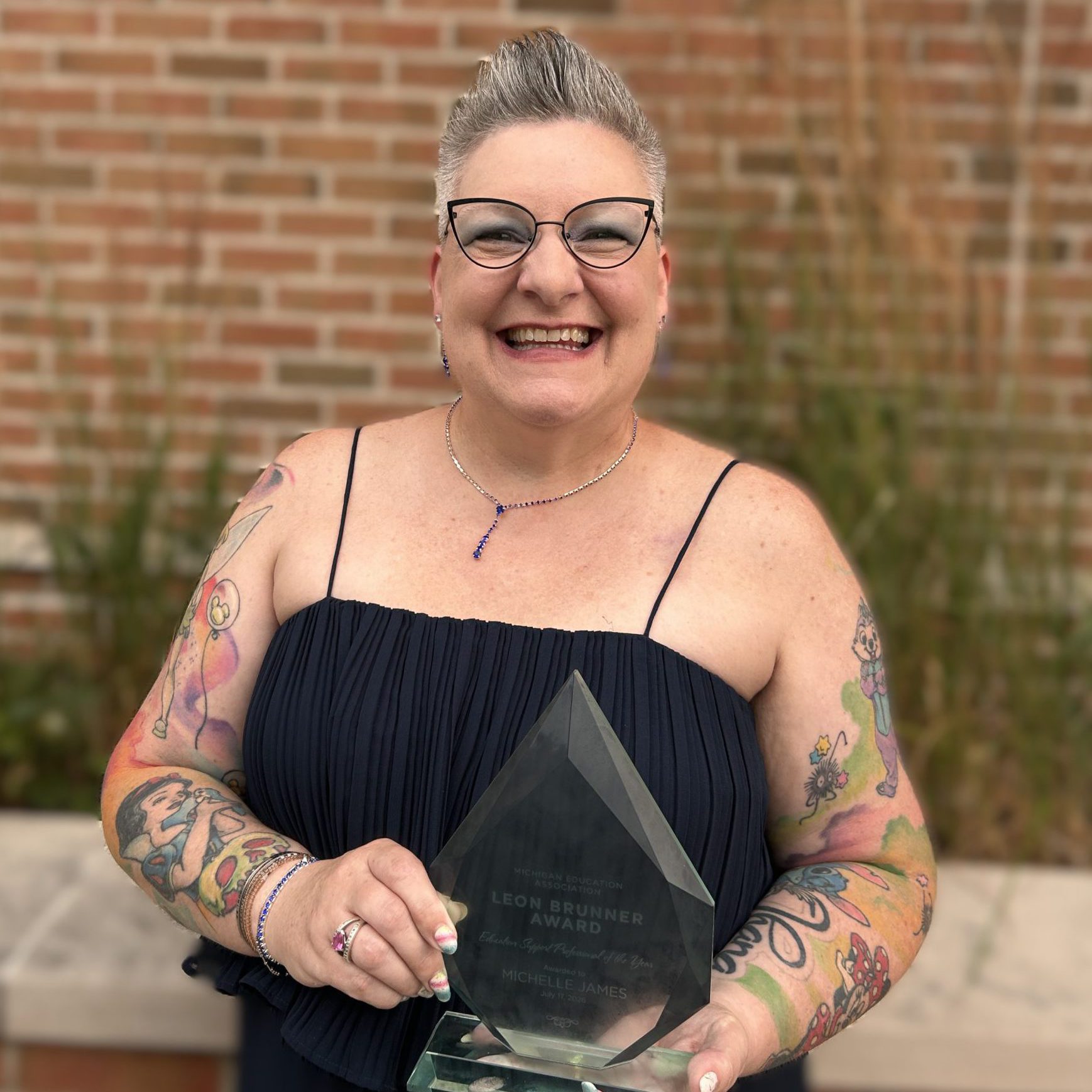
In the 16 years since becoming a paraeducator in Fraser Public Schools, MEA member Michelle James helped form a union, assisted in bargaining the group’s first contract, and held every position in her local — including her current role as president.
But it wasn’t until a recent bout with cancer that James says she stopped “working scared” and embraced a new mindset she calls “professionally blunt.”
“I wasn’t going to wait anymore for someone to invite me to the table,” she said. “I became determined to make sure that our voices were heard whenever decisions were being made that affected members, our jobs, our students, our lives, because our perspective matters.”
For her fierce commitment and advocacy, James is winner of the 2026 Leon A. Brunner Award — MEA’s highest honor given annually to an Education Support Professional (ESP) for dedication to union values, leadership and service.
“Your voice matters, and you never know the impact it might have,” James said in accepting the award at the MEA ESP Statewide Conference in July. “Thank you for this heartfelt honor.”
Like many, James identifies a gap between the significance of the work that paraeducators do and the respect they receive in return. She has long fought for higher wages and improved benefits but in recent years has expanded her focus.
For example, she and her team secured extra pay and stronger protections for members who monitor students’ fragile health conditions and administer medication. “One of my greatest passions is strengthening our contract language, because a strong contract protects people,” James said.
In 2010, when she first began working with students who have special needs, James was shocked to receive no training despite being assigned to help a second grader exhibiting violent behavior. She was stabbed in her first day on the job.
“Then I got together with the social worker for a couple weeks who gave me some strategies,” James said. “But looking back now with all the experience and the knowledge that I have, I’m like, ‘Holy smokes, that was horrible.’”
Since then, the local union has bargained paid professional development for paraeducators into the contract. In addition, James reaches out to new hires to share her cell phone number and names of coworkers in their building to assist with questions or concerns.
Her goal this year is to get a handle on the scope of student behavior problems and options for how the union can help equip members to improve classroom safety. Educators across the country are grappling with an increase in student aggression.
Paraeducators are bearing the brunt of verbal and physical assaults as center-based programs have closed and not enough resources have flowed to mainstreamed classrooms to help staff manage challenging behaviors, James said.
“If I can support a member who is trying their best but needs more, then maybe that person becomes able to advocate for themselves or feels confident enough to say, ‘Hey, I’m having trouble here.’”
Being part of a union, attending meetings and conferences where she encounters other leaders, inspires James to keep going and try new ideas, she said. “The union really ignites something in me. The more involved I get, the more I find the power from within.”
Over the years, her professional work has shifted and evolved from running academic groups for K-6 students in resource rooms to assisting middle schoolers who have identified learning difficulties succeed in general education classrooms.
“I feel like an octopus, because I do it all — reading, writing, math, social studies — and I have to be flexible and provide whatever students need,” James said.
From day one, she couldn’t believe the low hourly pay that even longtime paras were making. She joined a fledgling effort to organize a union, which succeeded but didn’t result in a settled contract for three long years.
That first agreement was barebones but laid the foundation for future gains, said Freya Weberman, the MEA executive director who serves the Fraser Paraeducators Association and wrote a letter in support of James’ award nomination.
“Michelle has raised up the Fraser paraprofessionals in every way and at every turn,” Weberman said, calling James a modest leader who “who simply and efficiently just gets stuff done regardless of whether it is her job or not.”
The contract for paraeducators now offers competitive wages, association release time, paid professional development, vacation days to cover several unpaid school break days, paid snow days, cash in lieu of insurance, longevity pay, and protection for member discipline.
Two years ago, James was elected president of her local after serving in every other union role. A breast cancer diagnosis two weeks later forced her to delegate to her executive board — as she assisted behind the scenes — a challenge that strengthened the leadership team.
Having cancer also taught James about herself. She used to get nervous talking with administrators but learned to stand in her strength and speak her mind. “Now I try to help others realize they can stand by the value of their work and advocate for themselves — and I’ll be right there with them.”
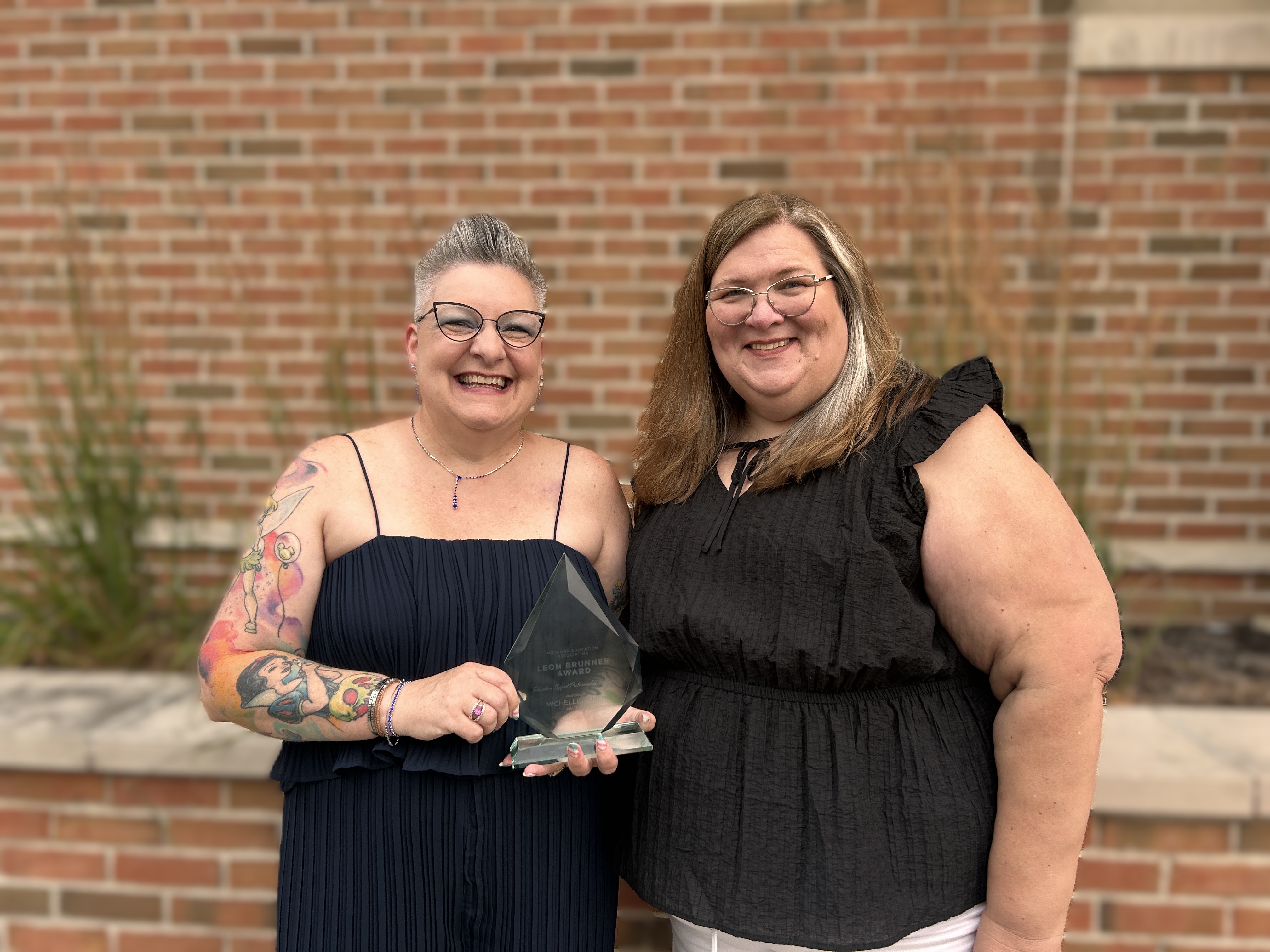
Last year, James took on a wider role as vice president of Education Support Professionals in her 6-E Coordinating Council to elevate the needs of custodians, bus drivers, food service workers, office professionals and others across districts in Macomb, Oakland and Wayne counties.
Stephanie Givinsky, a high school physics teacher and president of the Lakeview Education Association in St. Clair Shores, nominated James for MEA’s Brunner Award after working with her in the coordinating council. “She brings incredible energy,” Givinsky said.
“She’s welcoming, kind, compassionate, dedicated. She cares about kids; she cares about paras; she cares about teachers; she cares about the profession. Michelle has a heart of gold, and she just works so hard.”
James grew up in Warren and studied biology at Oakland University before marrying and starting a family. “I have a special-needs daughter, and so I always say: my home life makes me good at my job, and my job makes me good at my home life.”
She loves helping people in both her professional and union roles: “I always think, What would I want somebody to do for my own child? And I know the way that we can support special ed kids is by surrounding them with good people. That’s why I’m here and it’s what I do.”