Summit highlights literacy shifts
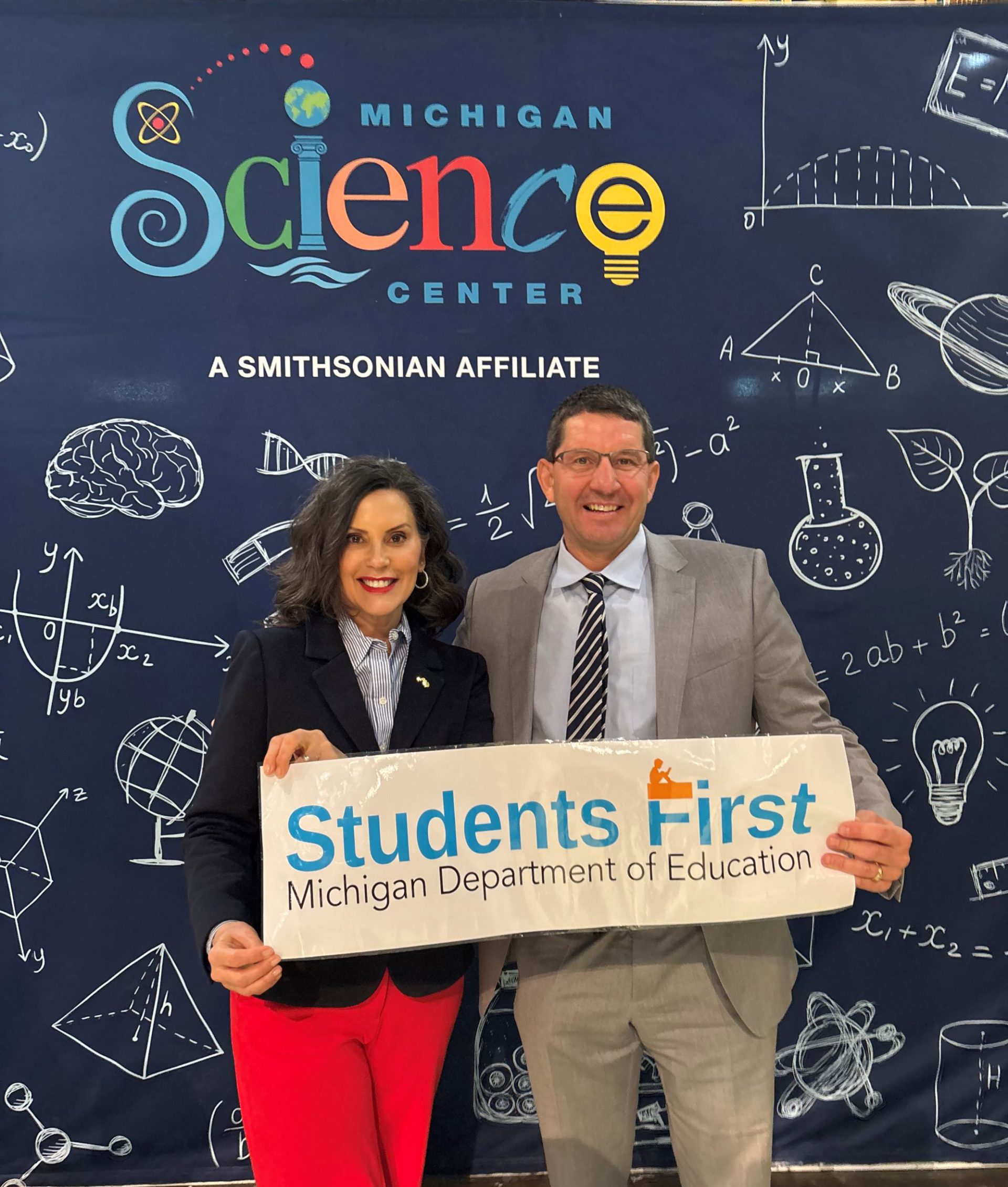
Gov. Gretchen Whitmer gathered hundreds of leaders from education, philanthropy, government and business in December to underline the need for shared responsibility to improve literacy — which she said in her final year in office, “will remain my number-one priority.”
“Helping every child read is tough; it’s a worthwhile goal. It’s a long-term project that will pay off in decades, not days,” she told 300 attendees at the Michigan Literacy Summit, co-hosted by new Michigan State Superintendent of Public Instruction Glenn Maleyko.
The all-day event at the Michigan Science Center in Detroit took stock of changes happening in Michigan one year into implementation of new literacy laws passed in 2024, which fully take effect in the 2027-28 school year.
The new laws require schools to screen for dyslexia and adopt curriculum, instructional methods, and multi-tiered support for struggling readers that are grounded in the science of reading, which includes explicit teaching of phonics in the early grades.
Sens. Dayna Polehanki (D-Livonia) and Jeff Irwin (D-Ann Arbor) co-sponsored the legislation, which also requires teacher preparation programs to train aspiring educators in evidence-based practices.
So far adding funding to hire more literacy coaches, help districts buy state-approved curricula, and provide grants for teacher training has been the main focus for Whitmer and state legislators.
The summit also served as an introduction for Maleyko, the former superintendent of Dearborn Public Schools, new to the state’s top post leading the Michigan Department of Education.
Maleyko said a sustained and collaborative effort to improve literacy is a critical priority. He planned to embark on a statewide listening tour to hear from students, educators and families.
“Improving literacy is not a partisan issue,” he said. “It’s a shared commitment to Michigan’s children… Do not body check your own teammates; we’re all on the same team.”
Several panel discussions explored complexity of reading skills beyond decoding and the roles of education partners such as out-of-school-time providers and the business community.
Panelist David Pelc, an MEA member reading interventionist in Romulus, started a private Facebook group, Michigan Science of Reading-What I Should Have Learned in College.
Educators need safe, collaborative spaces where they can talk about evidence, support each other, and improve instruction, Pelc said. “It’s important to see other people wrestling with all the different curricula and programs, and they can talk it out.”
Three panelists from Mississippi, who discussed their state’s success in lifting fourth-grade reading scores, said the key was a comprehensive strategy sustained over 20 years.
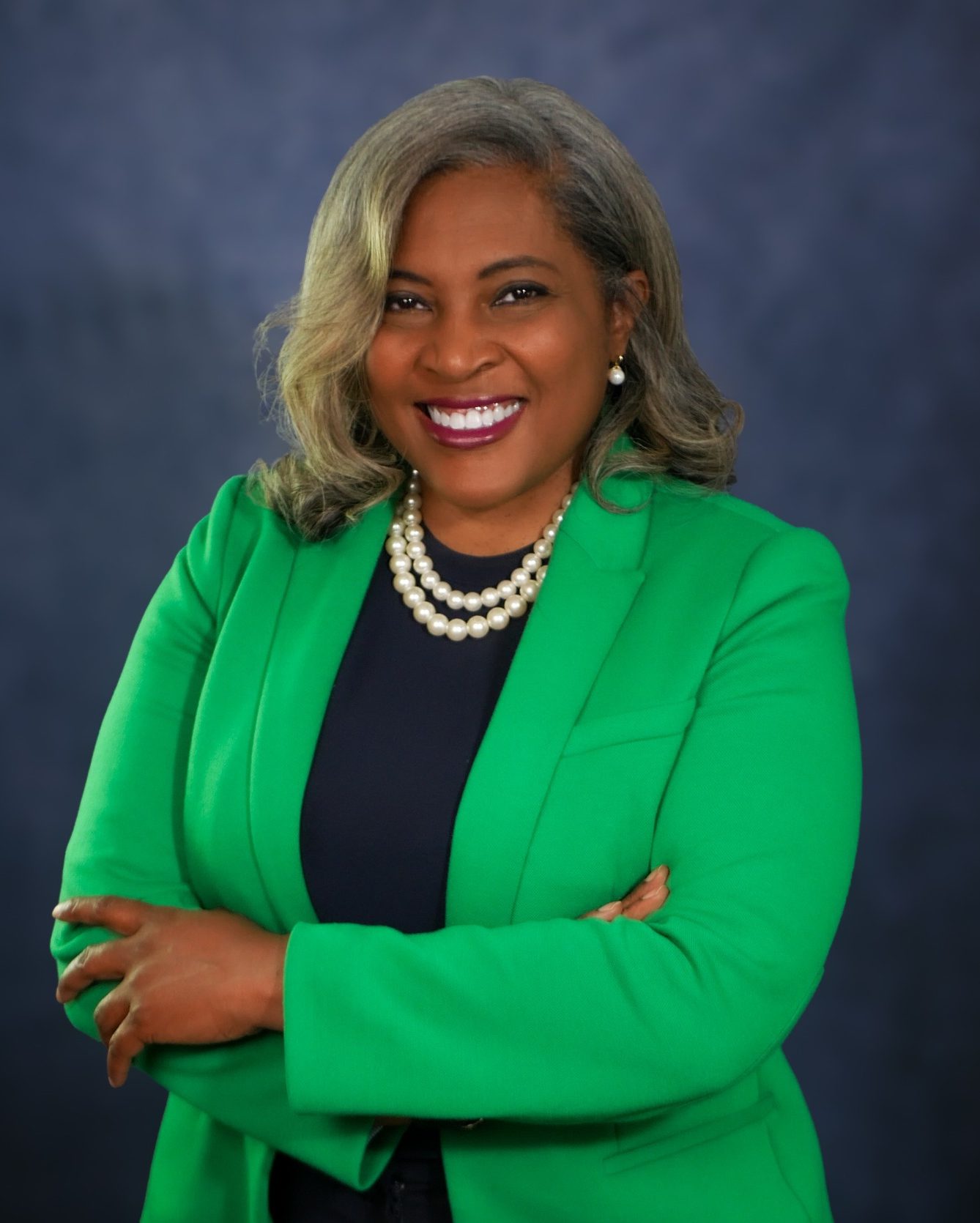
Michigan State Board of Education President Pamela Pugh said she appreciated the summit’s call for unity and urged continued focus on Michigan’s needs, which include higher pay to attract and retain educators and resources to support instruction.
“We need to continue to show that we prioritize education through getting the dollars to the classrooms and to our children,” Pugh said.
Related Stories: