Pick Benson for public education
By Brenda Ortega
MEA Voice Editor
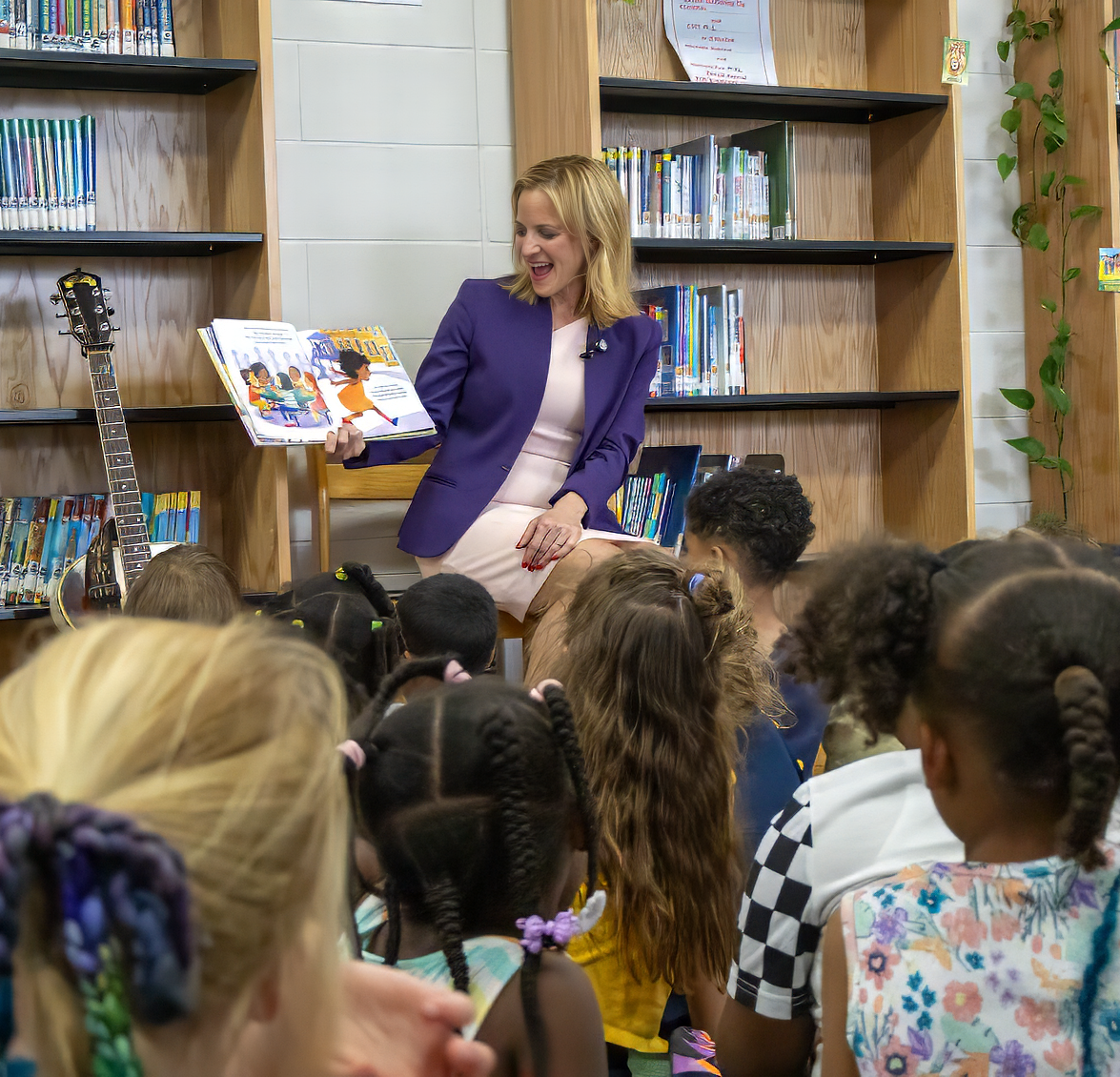
We all know Jocelyn Benson as Michigan’s secretary of state, but as candidate for governor she introduces herself as “the daughter of public school teachers” in nearly every campaign speech and appearance she makes.
A strong believer in public schools, Benson is MEA’s recommended candidate in the critical race to succeed Gov. Gretchen Whitmer — selected by a diverse group of MEA members who serve on the Statewide Screening and Recommendations Committee.
Benson told educators at the MEA Winter Conference last February that her parents were special education teachers and NEA members who inspired her to a career in public service and demonstrated how educators quietly show up early and stay late for students every day.
“A significant reason why I am running for this office is because I know and have seen and have lived firsthand your struggles and the need to have a governor who has walked in your shoes and is on your side,” she said in the MEA gubernatorial candidate forum.
“That’s who I am; that’s who I’ve been my entire life.”
Benson has put forth a broad and detailed vision for public education to ensure stable, equitable funding; improve educator pay and supports, including school support staff; and expand learning and career opportunities for students.
She’s called for increased compensation for educators. Her plan would expand play-based, hands-on and STEM learning for K-8 students; build more varied career programming for high schoolers; and create wrap-around services to better support children and families.
In a recent television news interview, Benson vowed to bring “increased focus and priority on funding public education.
“That’s something that has to be the foundation of everything we do, because we do not grow our economy if we don’t improve our public education system,” she told WDIV-Detroit. “My economic vision for the state is linked to improving our schools.”
She has committed to addressing rising out-of-pocket health care costs for public employees — a key issue for educators — and said she would have signed a bill, vetoed by Whitmer, that returned the right for public employees to bargain over health care.
“I look forward to signing these bills into law as governor,” Benson said in a statement after the veto. “And I’ll take on anyone, no matter how rich or powerful, who stands in the way.”
Standing for “the power of the people” is a constant refrain of Benson’s campaign, especially when comparing her leadership to that of her opponent, Congressman John James.
“Who do you want Michigan’s leaders to work for — the people or the powerful?” Benson said in a victory speech after winning the Democratic primary. “I will work for all of you and every Michigander in this state, not the highest bidder, not corporate interests, not Donald Trump — you.”
 By contrast, James’ two terms in Congress have seen him embrace extreme, far-right policies to earn Trump’s support. His top education priority is to adopt Trump’s federal school voucher scheme to funnel tax dollars to private and religious schools, an idea repeatedly rejected by Michigan voters.
James also wants to tie educator pay to test scores; require all K‑12 schools to post curriculum online; make teachers’ lesson plans subject to public disclosure; and mandate parental notification and opt‑in for classroom instruction on undefined “controversial subjects.”
Benson has said Trump’s voucher scheme lacks transparency and oversight. “As governor, I can’t commit taxpayer dollars to a program under Trump’s control with zero transparency or assurance it will deliver for Michigan students. That’s reckless and irresponsible.”
She repeatedly points out studies that have shown Michigan led the nation in cuts to education funding over 25 years — with an inflation-adjusted decline of 30% from 2002 to 2015, according to education policy researchers at Michigan State University.
“The fact is we have defunded our schools at a higher rate than any other state for three decades, and the small amount of work that Democrats have done recently to restore some of that funding is far from what’s needed to actually get to where we need to be to have the excellent schools we want,” Benson argued at the MEA gubernatorial candidate’s forum.
She advocates getting rid of the state’s “one size fits all” funding model for a more equitable system based on students’ and communities’ needs. Her plan separates K-12 and higher education funding but ensures support for both.
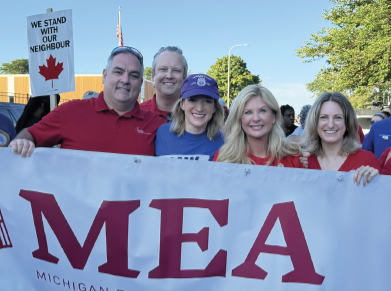 “Both are critical to enabling our education community to prepare our young people for the jobs of tomorrow. But we have to change the structure of how we’re funding education in the state if we’re going to get to that goal we all have — which is for our schools to be the best in the nation.”
First elected to statewide office alongside Whitmer in 2018, Benson streamlined and modernized Secretary of State services. She oversaw implementation of separate voter-approved initiatives to draw non-partisan legislative district maps and expand days, hours and methods of voting.
A former law school professor specializing in election law, education law, and civil rights, Benson became the youngest woman to lead an accredited law school in the U.S. as dean of Wayne State University’s law school from 2012-16.
Her goal as governor will be to restore not only pay but respect for educators, she told MEA members back in February. “As governor, I will make sure that you have a seat at every table. Every decision that is being made about you and your work, you will have a voice in, you will be part of.”