
What changed in Oxford since school shooting
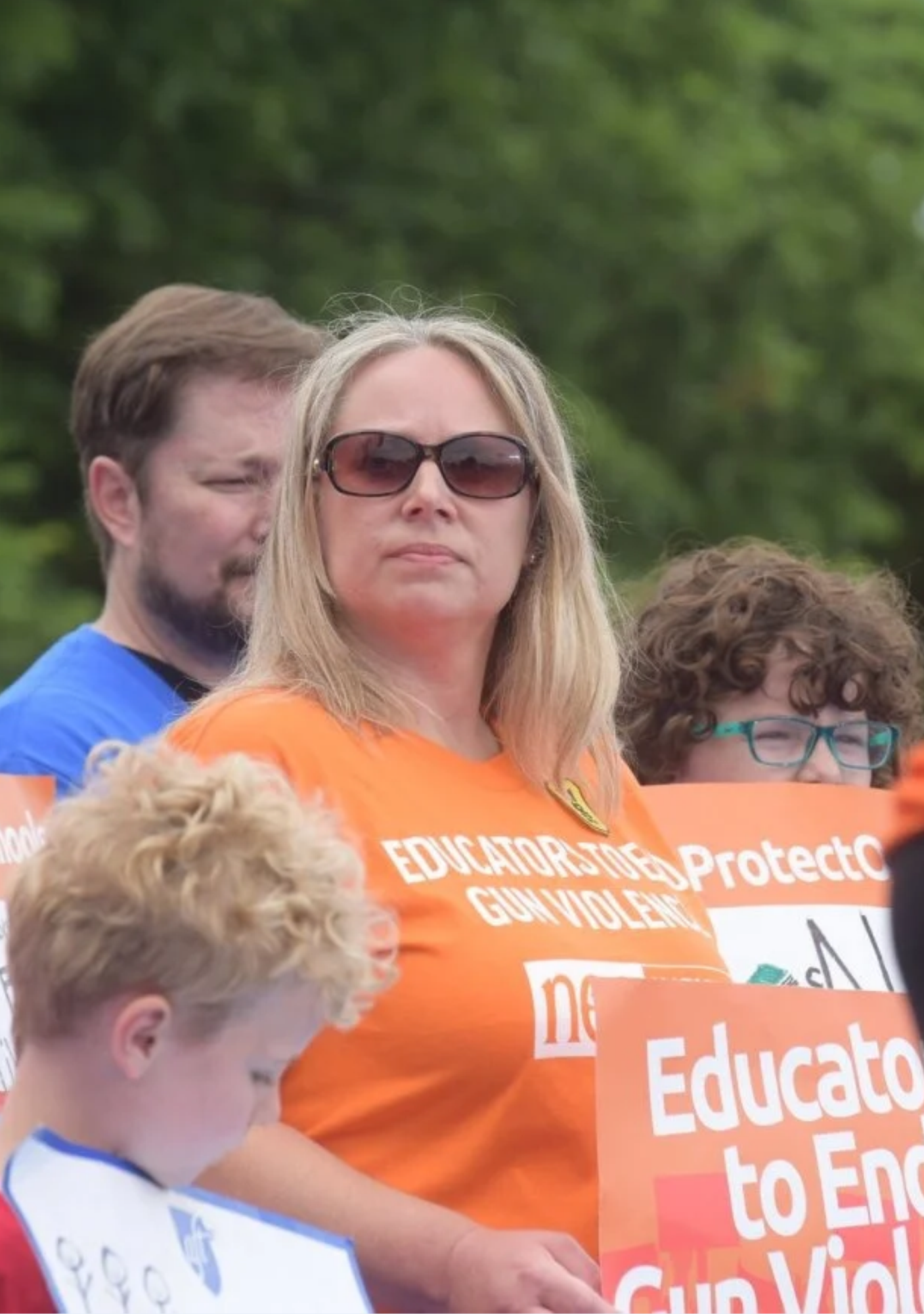
MEA member Melissa Gibbons knows everyone in Oxford suffered terrible effects five years ago when a 15-year-old student gunman killed four classmates and injured seven others, including a teacher.
“Whether you were in the school or not in the school, your kid was there that day, not there that day. It truly devastated the entire community.”
But Gibbons came to realize she had an unusual perspective. “Those of us who were there that day with our own children had to kind of put things aside. We had to be teachers and not just parents.”
Gibbons is a veteran English teacher; husband Jim is the longtime band director and union leader; and their three daughters were students at Oxford High School at the time of the shootings in November 2021.
In the aftermath, she brought the educator/parent point of view to a role in national activism through NEA, which she said, “also helped with my own healing. It gave me purpose.”
Just a few months after Oxford, an 18-year-old gunman killed 19 students and two teachers, injuring others, at a school in Uvalde, TX — amid a year, 2022, that would set a record for the highest number of school shootings since detailed tracking began.
That summer, President Joe Biden signed the first major federal gun legislation in 30 years, the Bipartisan Safer Communities Act, enhancing background checks, limiting gun purchases by convicted domestic abusers, and allocating $15 billion for school security and mental health.
Then in February 2023, a shooting at Michigan State University again rocked the state as three students were killed and five critically injured on campus. Later that year, a newly elected Michigan Legislature passed several broadly popular gun safety measures.
Those gun violence prevention laws, signed by Gov. Gretchen Whitmer, expanded background checks to all gun purchases, set safe storage requirements, and established guardrails to prevent access to firearms by individuals deemed a threat to themselves or others.
More action is needed to address educator shortages and student mental health, Gibbons says. “Where we need to continue investing more money is in having adequate counselors and staffing to be able to directly interact with students who may be struggling.”
Read our package of stories, Oxford: Five Years After