
Higher ed member’s research shows vouchers harm kids
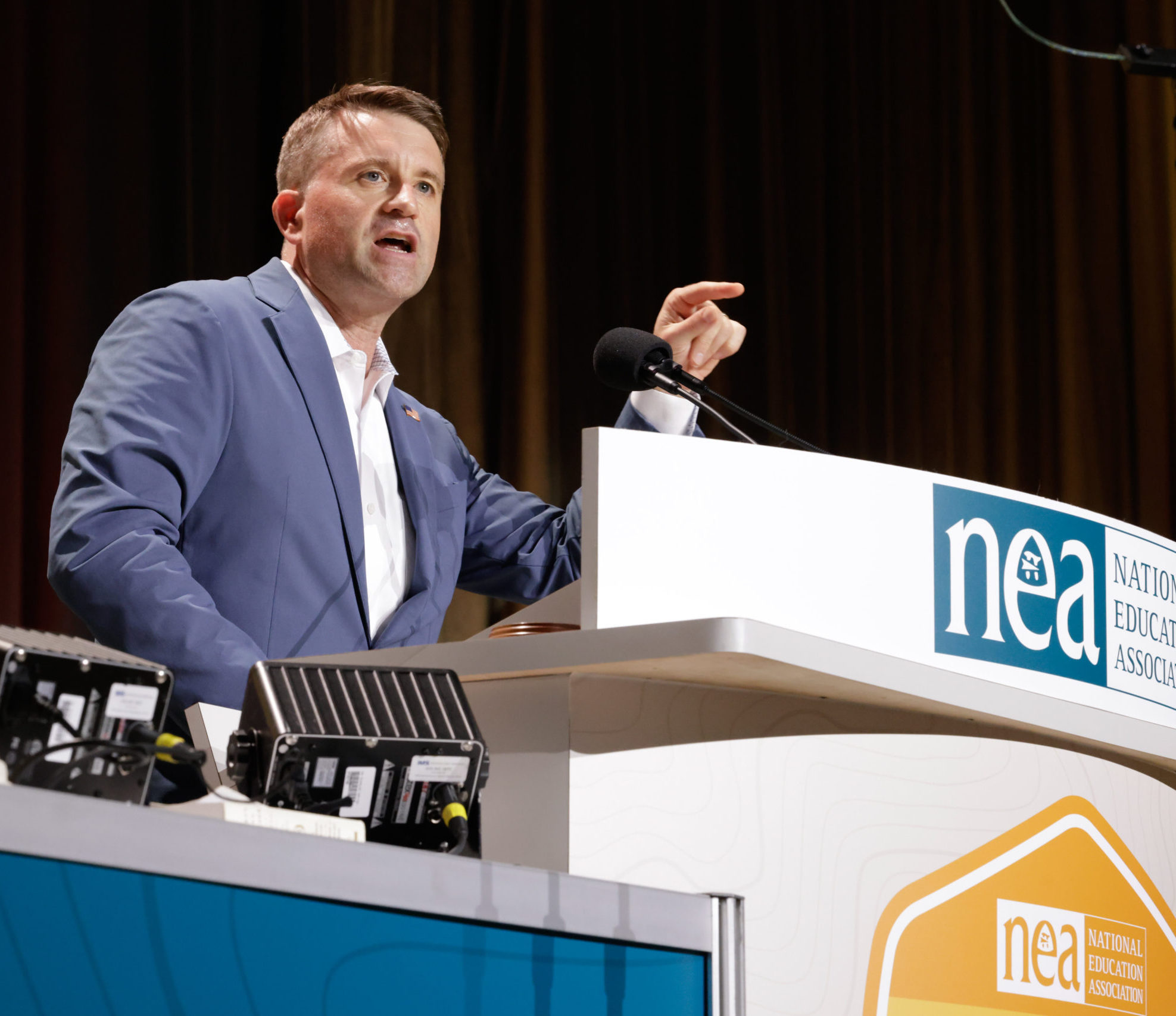
Two decades ago, MEA member Josh Cowen began his career as an education researcher without strong opinions on school vouchers and full of idealism about the potential for scientific data to help make public schools the best they can be.
Over time, working alongside voucher advocates to evaluate programs, he watched as evidence mounted showing vouchers harm students and communities — especially the most vulnerable. Yet proponents continued pressing for expansion.
Today he’s a modern-day Paul Revere, traveling the country to speak and testify, writing articles and books, warning of the danger he sees in a school reform movement built on right-wing ideology instead of evidence – and funded by a shadowy network of billionaires.
“Just on the merits, vouchers should have died a decade ago,” Cowen said in an interview.
A professor of education policy at Michigan State University and member of MSU UTSF (Union of Tenure System Faculty), he added, “Why are we still having this conversation?”
Cowen is talking about vouchers a lot these days out of necessity. The policy of granting publicly funded “scholarships” or “tuition tax credits” for children attending private schools has spread to more states than ever, despite a record of academic loss for students.
Last July, Republicans in Congress and President Donald Trump passed the first nationwide federal voucher scheme, which will require states to opt-in. “There could be some benefit to public schools under the federal tax credit, but the devil will be in the details,” he said.
Cowen wrote a book, The Privateers: How Billionaires Created a Culture War and Sold School Vouchers, published by Harvard Education Press, to tell the story he’s witnessed over 20 years and make the case against vouchers plainly and urgently.
From the introduction: “Expert analysis, independent and investigative journalism, and a handful of transparent state and federal accountability audits show that policies diverting public funds for private school tuition have some of the worst outcomes in the education research record to date.”
For his work, Cowen was honored with NEA’s 2025 Friend of Education Award at last summer’s NEA Representative Assembly (RA). In his acceptance speech, he explained that vouchers were rooted in backlash against the Civil Rights movement dating back to the 1950s.
“When I first started the work that brought me up here, I thought I was talking about history,” he told thousands of member-delegates gathered in Portland, Ore. for the NEA RA in July.
“But as we’ve seen, threats to public education and to public investments in all of our futures — from health care to jobs to retirement security and even basic, affordable costs of living — this is all very much breaking news.”
In the first Trump administration, Michigan Republican Party donor Betsy DeVos became U.S. Education Secretary favoring charter schools and vouchers. But it’s bigger than DeVos.
“It’s an entire political agenda,” Cowen said. “We know not just the DeVoses but other Republicans are gearing up to make 2026 in Michigan the ‘education election’ for their priorities like more standardized testing. Cuts to public school funding. And yes, school vouchers.”
In his book, Cowen details how randomized control trials — conducted by multiple research teams studying voucher programs in Louisiana, Indiana, Ohio and elsewhere — measured academic losses on par with or surpassing those from Hurricane Katrina and later COVID-19.
Meanwhile, a growing body of research reveals strong positive effects from increased funding to public schools when sustained over time and paired with evidence-based practices.
“If you grew up professionally, as I did, in the world where data and evidence and results are supposed to inform public policy, then you should be saying at the top of your lungs that vouchers hurt kids and families,” he said.