MEA Assembly re-elects Madafferi, honors Whitmer
By Brenda Ortega
MEA Voice Editor
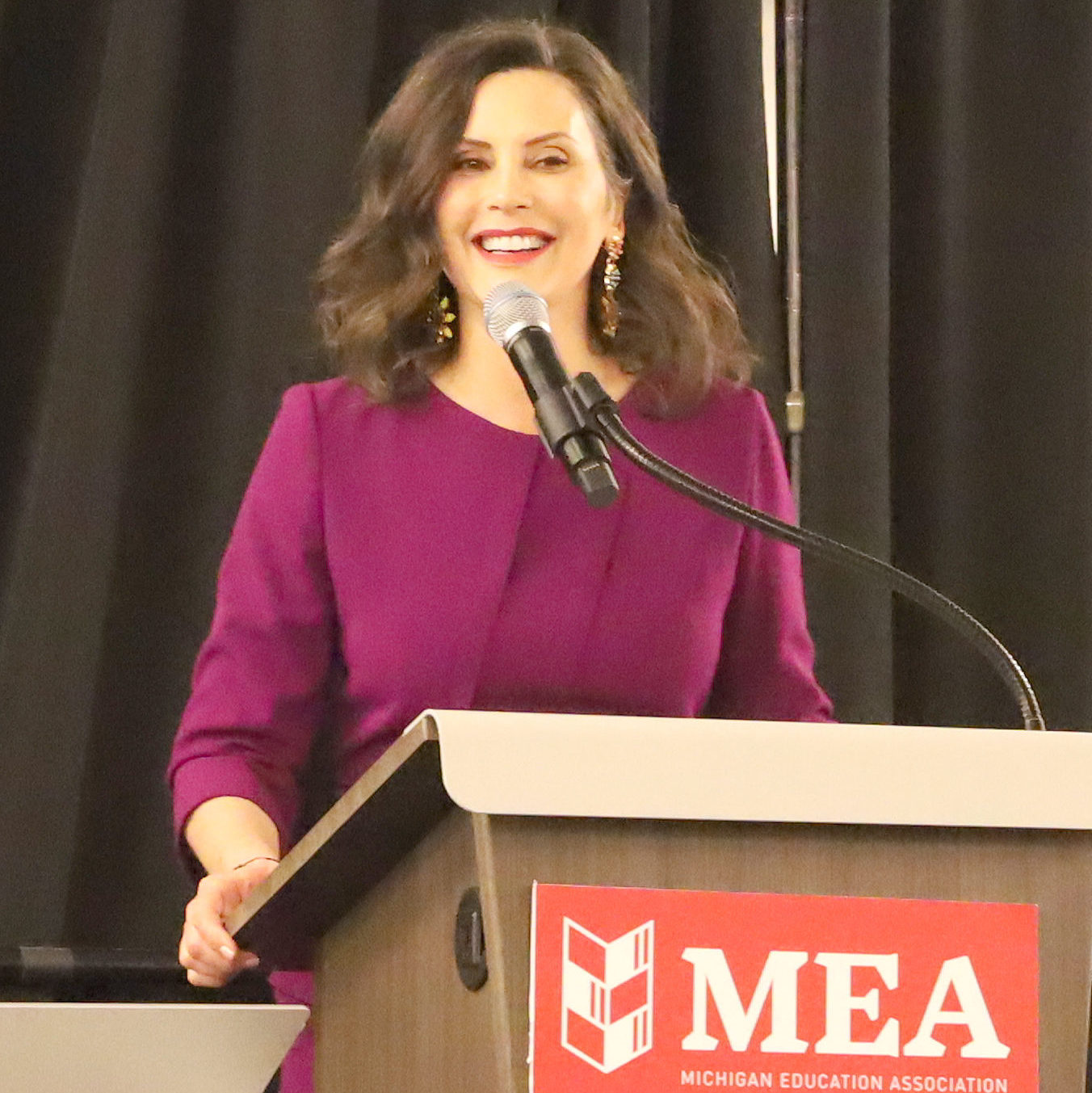
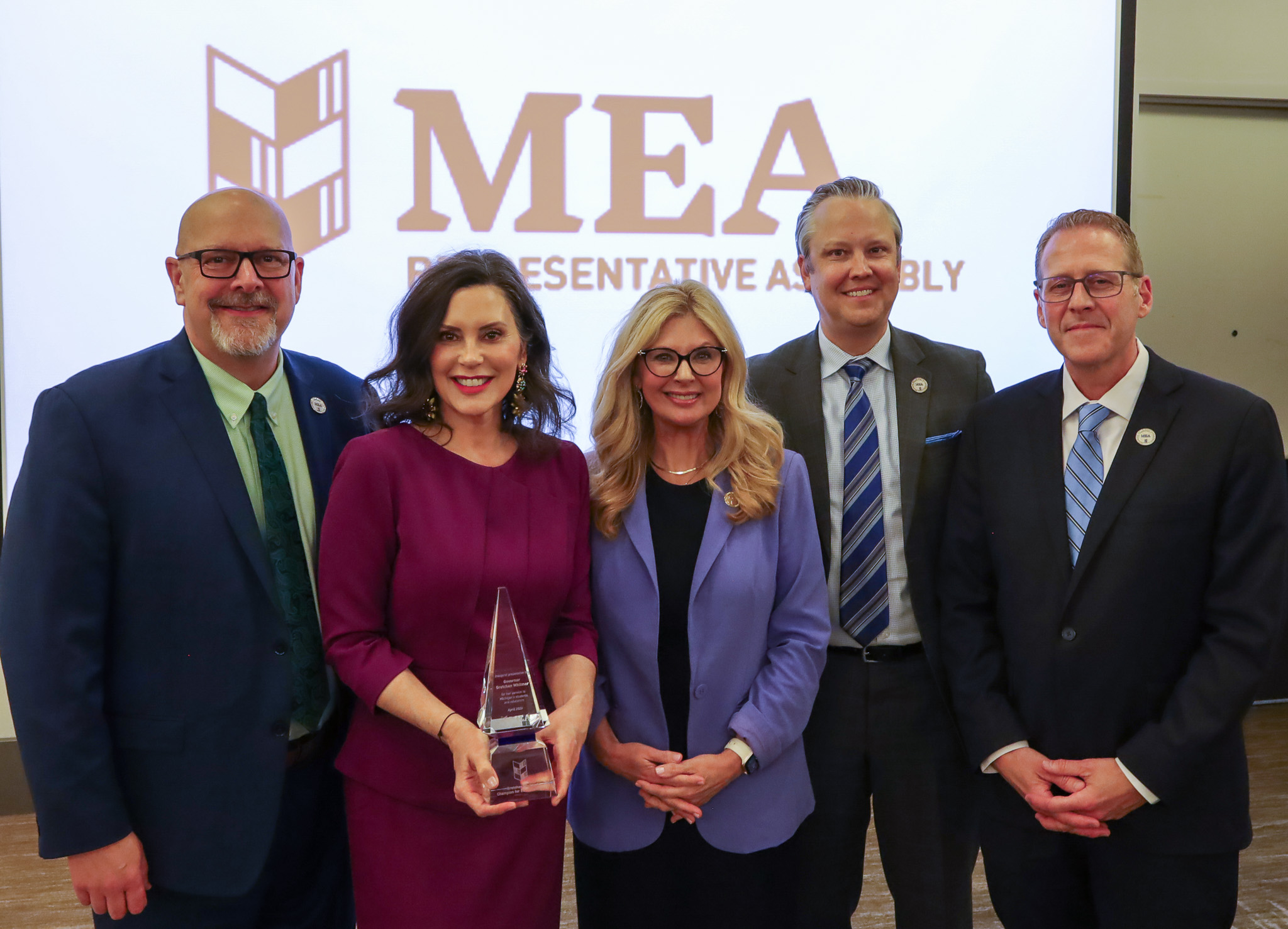
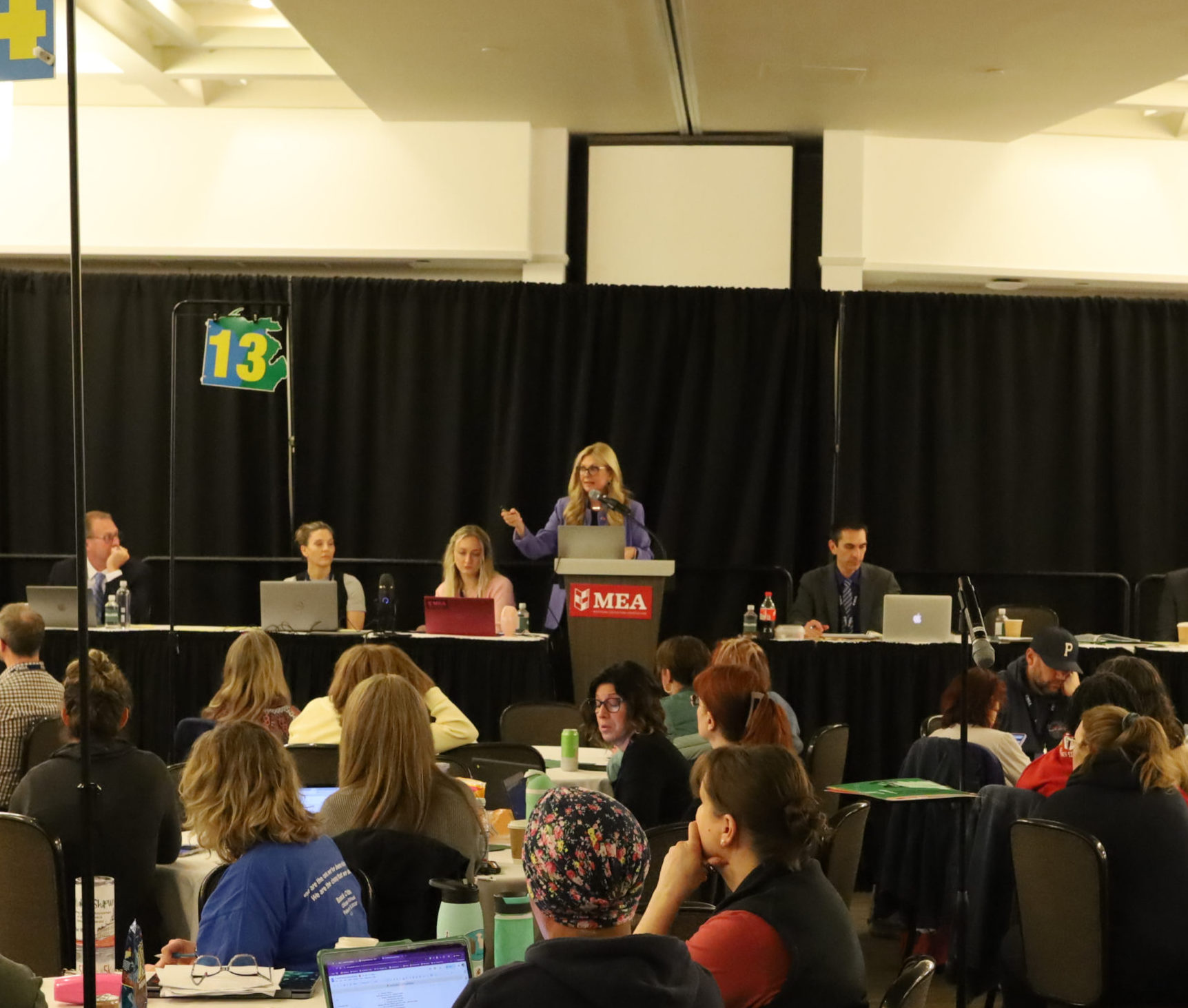
Gov. Gretchen Whitmer appeared at the MEA Representative Assembly (RA) last weekend to receive an inaugural MEA award named after her in honor of her work over eight years in office to restore public education and respect educator voices.
Delegates to the RA gathered in East Lansing for the annual meeting on Friday and Saturday to conduct the business of MEA, which this year included officer elections, passing an annual budget, and considering several new business items and resolutions.
Whitmer told hundreds of delegates in the audience that she views the Gretchen Whitmer Champion for Education Award as “a calling to keep doing more.” The honor will be given in the future to elected leaders who make public education a top priority throughout their time in office.
In a speech marked by humor and affection, Whitmer stated goals and accomplishments she has worked toward to strengthen education, including free pre-K; tuition-free community college; and scholarships, stipends, and grow-your-own programs for aspiring educators.
Following decades of state disinvestment, the two-term governor has prioritized rebuilding per-pupil funding, providing universal free school meals, restoring collective bargaining rights for educators, closing the funding gap between schools, and including money for educator salaries and retention bonuses.
“I remember John Engler calling himself the education governor,” she said, referring to the three-term Republican from the 1990s who ushered in an era in Michigan that would lead the nation in education funding losses and for-profit charter school proliferation.
“He’s never going to get the Gretchen Whitmer Award, is he?”
Whitmer vowed not to coast through her final year in office as she continues a push to restore education funding and builds momentum for ongoing literacy improvements. “I know what it feels like at the end of the school year, but none of you coast — and I sure as heck ain’t going to coast either.”
Her proposed 2026-27 education budget would increase per-pupil funding, boost literacy supports, and make permanent free school breakfast and lunch.
“Every one of you plays an important role in our goals as a state to make sure that every person has a real opportunity here, so we will continue this work together,” she said. “The fight will continue even after my administration comes to a close.”
She told the crowd, “Thank you so much for this award. I love you all.”
Educators in Michigan have been blessed for eight years to have an ally in the governor’s office after a dark time in the early 2000s and 2010s, said MEA President and CEO Chandra Madafferi. Whitmer’s leadership helped turn the tide and restore educators’ hope, she said.
“It’s easy to take for granted that pro-education candidates follow through and grow as education lawmakers. Sometimes, though, a leader exceeds that expectation and makes standing up for the promise of education, the success of our students, and the respect for our profession a central theme of their time in office.”
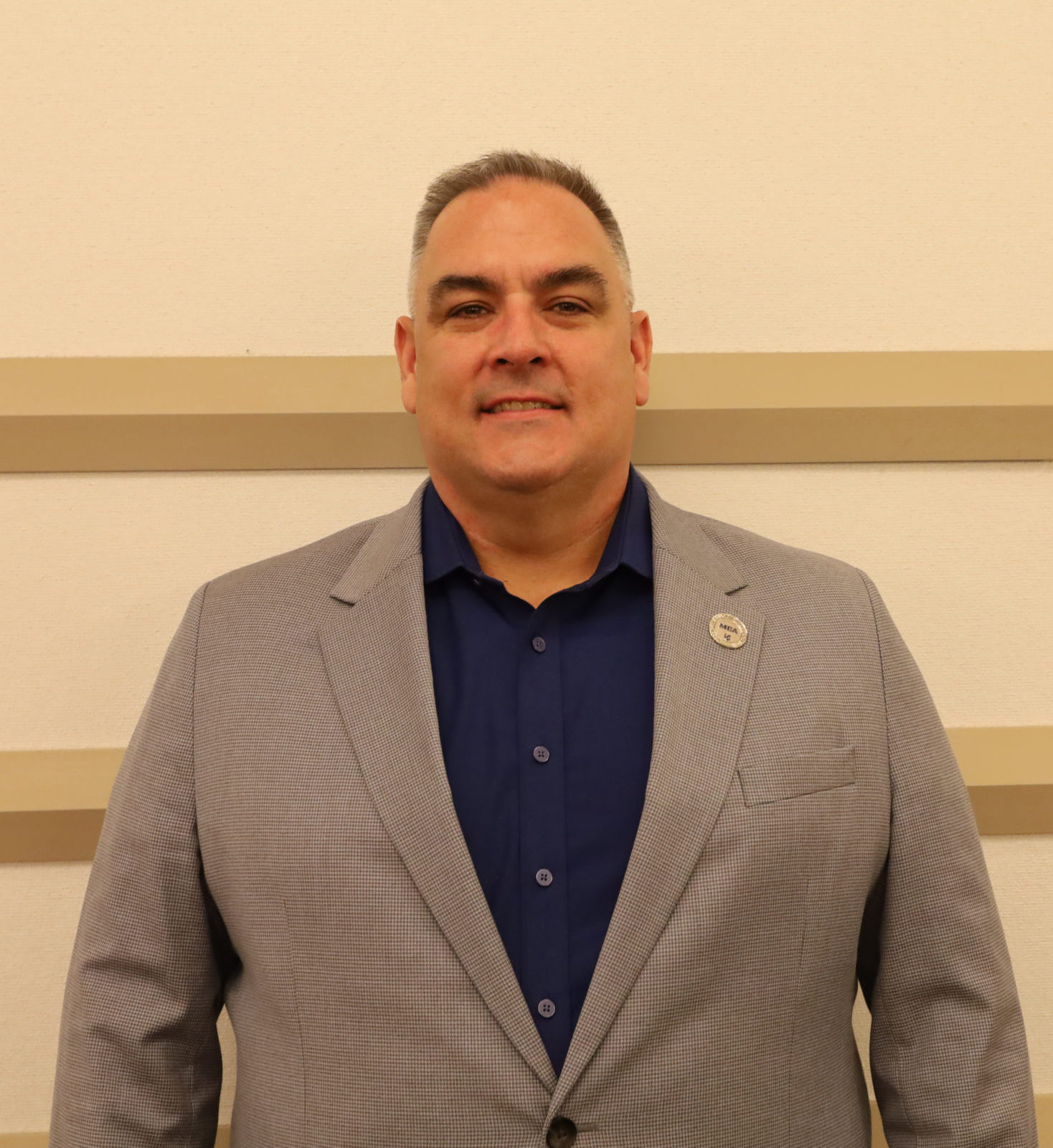
In other action at the annual two-day governance meeting, Madafferi was re-elected to a second three-year term in office, along with Secretary Treasurer Aaron Eling. Warren Education Association President Bob Callender was elected Vice President.
Callender replaces Brett Smith, who finishes nine years in office this summer, including six years as secretary treasurer and three years as vice president. In a brief speech at the RA’s conclusion, Smith said thank you and farewell to delegates.
“We have the power to lift education to a new level, not only here in Michigan, but across the country,” Smith said. “No one is going to do it for us. It must be us, and it must now. We cannot harvest the crop of unionism unless we are planting the seeds of unionism every single day.”
Madafferi expressed gratitude for Smith’s service, thanked Eling for improving the budget process and initiating a new MEA military veteran’s caucus, and looked toward the future in a presentation to the assembly on the state of the union.
She touted the work of leaders and staff in lifting educator voices in policymaking and promoted the early success of MEA’s burgeoning ESP Bill of Rights campaign to improve the lives and working conditions of education support professionals.
“This is going to be a multi-year project, and we’re going to dig in… because one job should be enough for everybody — no matter what your job is,” she said. Moments later, delegates unanimously approved a motion to support the ESP Bill of Rights. Add your name to the list of endorsers.
As the state’s educator workforce continues to skew younger — with longtimers retiring and newcomers replacing them — union membership has continued to grow year-over-year, but the work of organizing only grows more urgent, Madafferi said.
“The threats are real, but there are so many great opportunities.”
MEA Senior Executive Director Erik Edoff, addressing his second RA in the role, concurred and stressed the importance of members and leaders building relationships to exercise “soft power” across their professional and union lives.
“You’ve had to use these in bargaining; you’ve had to use these in negotiating issues, in dealing with problems,” Edoff said. “I would ask that you take some time to reflect on how you can implement more ideas of soft power in your professional spaces.”
Edoff praised bipartisan efforts that led to a good state budget for this school year — following an arduous process and late adoption — along with a new law that bans students’ use of smart devices in schools during instructional time.
“We have other (digital safety) bills on the floor now that we believe are beneficial as well,” Edoff said.
This year’s 2027 state budget process is under way, and members will need to speak out to ensure a positive outcome in this important election year. “We’re going to see a much faster process, and that could be good but could present challenges too.”
RA delegates passed their own one-year budget on Saturday, along with resolutions in support of returning driver education to schools, culturally responsive efforts to improve student attendance, Native American genocide education, immigration and birthright citizenship, and more.
A New Business Item also passed that directs MEA leadership and communications staff to support Senate Bill 510 which would require federal Immigration and Customs (ICE) officers to have active body cameras and visible identification and to not wear masks.
“These are standard practices in a democracy for law enforcement,” said MEA-Retired member Sid Kardon, who made the motion to adopt. “There’s no reason that these standards should not apply to ICE.”
Pointing to violent and unconstitutional ICE tactics in U.S. cities, including Minneapolis, Kardon said, “Intimidation and cruelty want to remain anonymous. It makes it easier to conduct illegal and assaultive behavior.”
MEA already supported SB 508 which would bar immigration enforcement activity on school grounds and other sensitive locations.
Among other proposals adopted, delegates voted to direct MEA leadership to begin a dialogue with the Michigan Department of Education about the need for reinstatement of virtual instruction days as an option when the PSAT and SAT are administered.
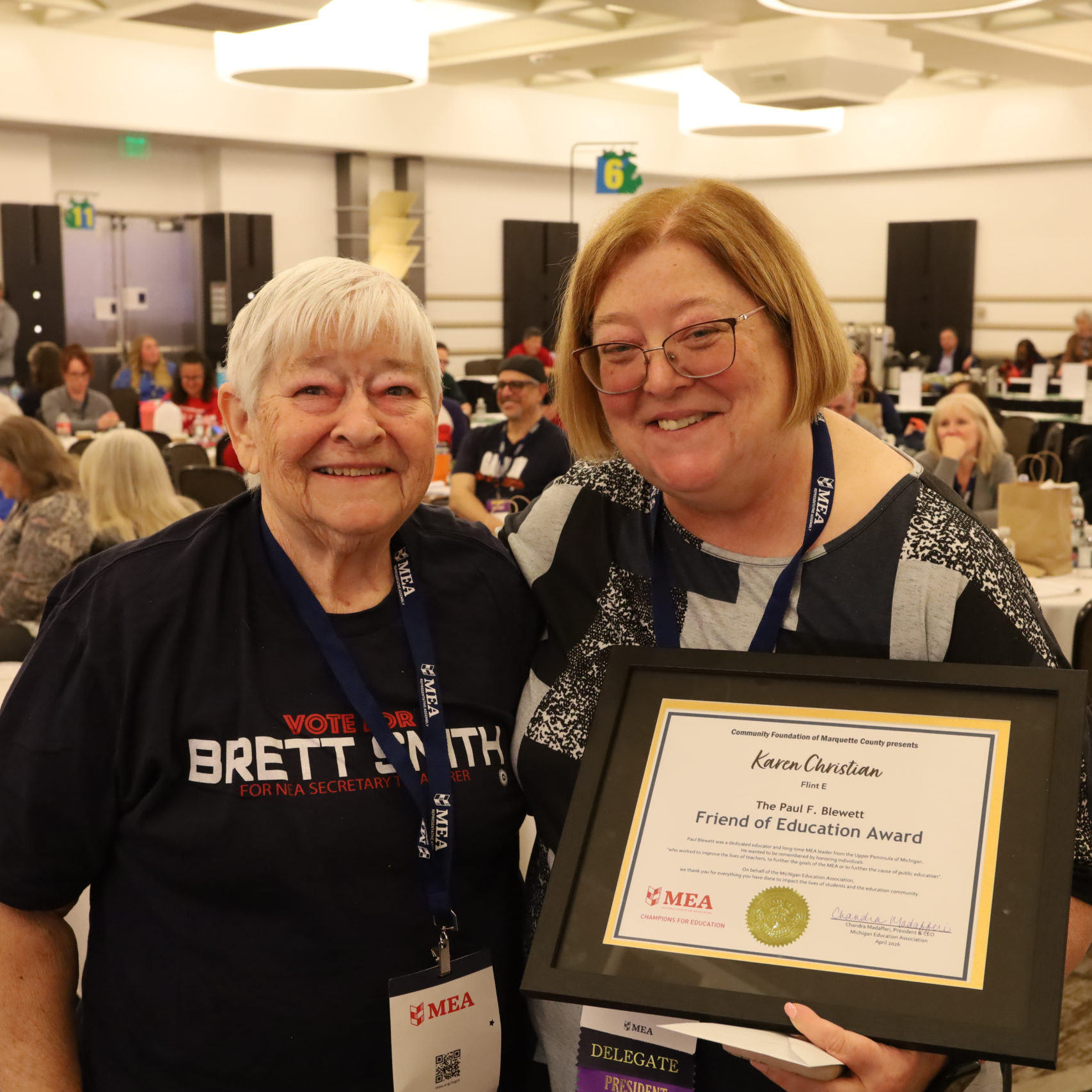
In addition to acting on the budget and new business, the RA honored longtime Flint educator and union leader Karen Christian with the Paul Blewett Friend of Education Award. Read her story.