The Comeback: Hard Won, Not Done
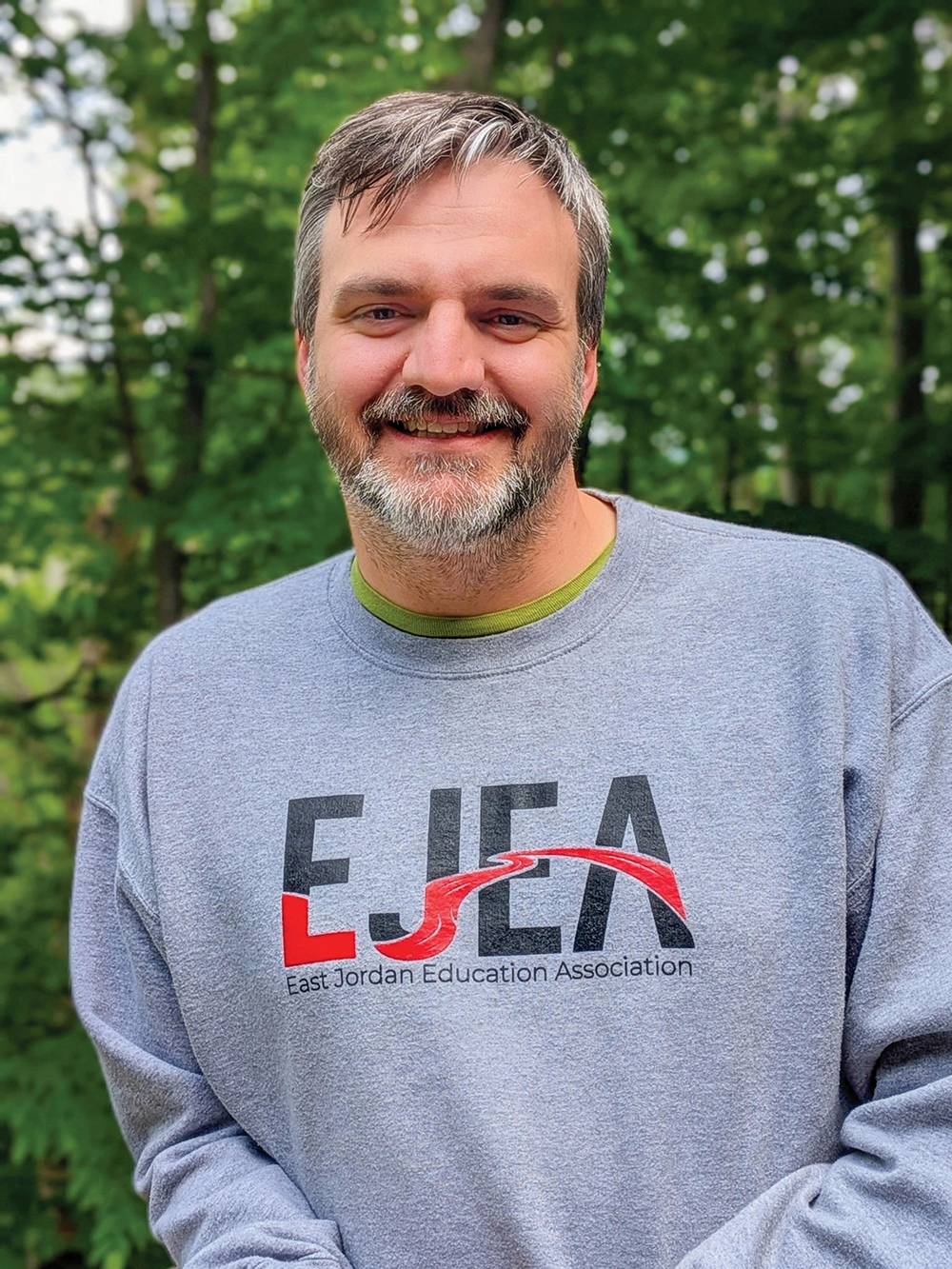
By the time MEA member Nathan Fleshman began teaching in 2013, the “social contract” that he believed in growing up — ensuring educators could rely on stable pay, benefits and retirement — had been broken.
Fortunately for Fleshman, a science teacher and union president in East Jordan, some of what was lost has been won back, giving him hope to be able to stay in the profession he loves.
“Teachers want to make the world a little bit better, a little bit at a time,” he said. “The demoralization comes in when policies are enacted that limit our ability to help. We’ve seen that sometimes the answer is as easy as voting for the right people, who’ll let us do our jobs.”
School funding increased every year during two terms of Gov. Gretchen Whitmer, and local unions secured salary improvements. Pay for student teachers, fellowships for aspiring educators, and grow-your-own programs have begun to shore up the educator pipeline.
But modest gains in school employees’ pay have been eaten up by faster-rising costs of living, such as explosive housing prices in his northern Michigan community, Fleshman said.
Since Gov. Rick Snyder left office in 2019, legislative fixes have been key: Collective bargaining rights for public employees — stripped away under Snyder and a Republican-controlled Legislature — were restored in 2023 after Democrats won slim majorities in both chambers.
Negotiating clear rules for evaluation, placement, discipline, layoff and recall ensures fairness and reduces friction, Fleshman said: “Bringing transparency to these processes helps administration, too, because everyone knows what to expect.”

Yet it can be difficult to dislodge the mindset of top-down control among school administrators, says Kelly Pearson, a 27-year first-grade teacher in Clawson serving as interim union president.
In early 2024, Pearson’s local was among the first in the state to restore topics to the teachers’ contract which had been previously barred from negotiation tables for a dozen years. She soon stepped down as president to allow younger leadership to take over.
Then the new president left for a district offering pay based on full years of service. The teacher had been frozen on a low salary rung for years and wasn’t made completely whole in Clawson.
As interim president, Pearson filed grievances related to layoffs and involuntary transfers that didn’t follow the restored contract provisions. She reminds members, “We have the talent and we have the power — if we’re unified and not afraid to speak up.”
Collective action is how educators improve learning conditions for students, agreed Ryan Ridenour, a 13-year social studies teacher and union president in West Bloomfield.

For example, a long MEA campaign and pro-public education Legislature in 2023 fixed the arbitrary teacher evaluation system adopted under Snyder in 2015 — which had created a climate of competition and fear — to make it less punitive, more developmental, and bargainable.
“I saw firsthand, when those prohibited topics were established, what it’s like when the state of Michigan goes through your contract with a red pen and just crosses things out.”
Like Nathan Fleshman, Ridenour straddles a generational divide. He knows both the harms done in the recent past and how repairs made since then have improved daily life for educators.
He understands, “If we don’t get the right people elected in November, that eight years of progress could just be completely reversed.”
Read all of the stories in our special report, ELECTIONS MATTER >> by Brenda Ortega, MEA Voice Editor: